
The Pen Case I Have in Mind
I was emptying the drawer beneath my desk one afternoon to reorganize it. Before I knew it, seven pen cases lay on my desk.
I started to reflect on how each of them made it there.
These days, there are endless options in the market. But the goal remains the same: transport your fountain pen(s) from A to B safely. How each case does that is up to the manufacturer. Some opt for a hard enclosure, while others choose soft and pliable materials. Some allocate individual sleeves in the case for each pen, while others utilize elastic bands to fix the pen in position. Then there's also the aesthetics of the case.
What qualifies as 'ideal' is entirely a matter of preference. I've used multiple pen cases over the years. In the process, I've noticed a consistent set of characteristics in my preferred ones. Perhaps it could guide others in their search for a case. Here's what I have in mind.
I. It should accommodate oversized pens
The case should fit pens of all sizes. Some days I carry the slim and slender Sailor pocket pen, and on others the oversized Pilot Custom Urushi. The case must be able to secure both comfortably. Being obligated to switch cases just because I'm carrying a different pen is the kind of object worship I'd like to avoid.
Supersized pens are a different matter. Tohma's 77, Namiki's No. 50, and Furuta's No. 50 are an extreme. It'd be unfair to ask a maker to consider pens as such when designing cases. Although, doing so won't hurt.
II. The inner lining needs to be soft
I've seen pen cases designed with materials that would scratch the very thing it's protecting. Attention must be paid to the materials of the case. Leather, suede, or silk are all preferable. Synthetic materials are perfectly acceptable as well. They just need to be soft.
III. Inner sleeves instead of elastic bands
This requirement alone eliminates a lot of pen cases. Individual sleeves offer better protection than elastic bands. With elastics, most of the pens remain exposed and the pens may rub against one another during transport. There's also the subject of lacquered pens. A lot of owners report that elastic bands will dull or discolour the lacquer finish. It's one of the claims that feels like a myth. I'm not in a rush to disprove this with my own pen.
IV. Zippers (if present) shouldn't be a threat
Many cases I've seen with zippers lack consideration from the maker. The zipper always stands on the edge of the case, waiting for the pen to rub against it. Over time, this will develop scratches.
Some solutions exist. Not using zippers is one of them. Others include a flap that folds over the pens, keeping them from ever touching the zipper.
It's the type of consideration that builds a reputation among makers.
V. The case shouldn't attract attention
Part of it is pragmatism — a colourful pen kimono doesn't belong in an office. But even outside of that, I don't want to tire of a case, and simple, subtle designs tend to outlast the flashier ones.
It's quite difficult to find a case that meets all requirements in the above list. Most of the ones out there — and even some of the ones I have — leave 1-2 on the table. It's understandable. My preferences aren't the only ones, and others' are just as valid.
That being said, a few pen cases I've used over the years stand out.
Stylo Art's Pen Kimono (1-pen)
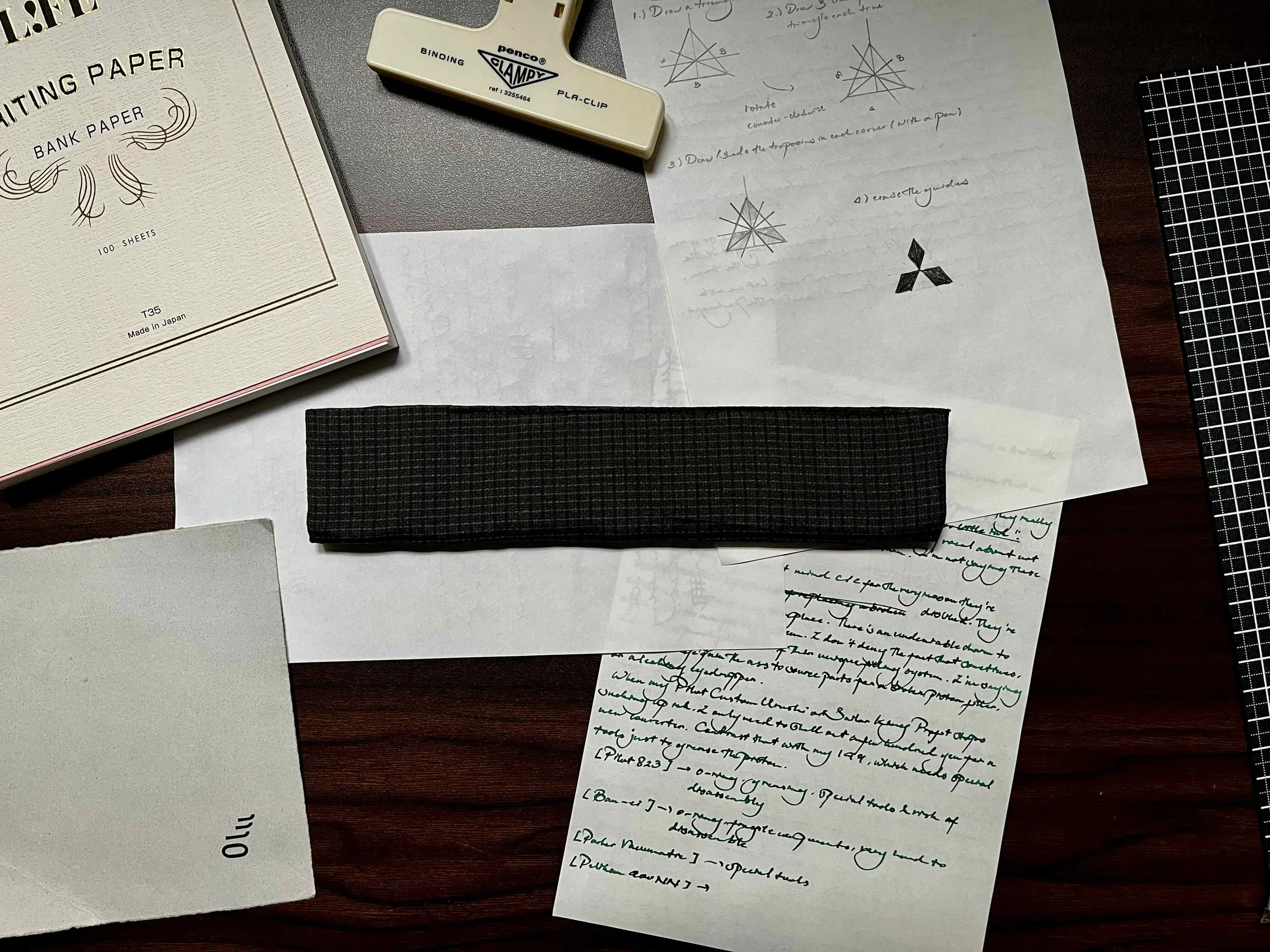
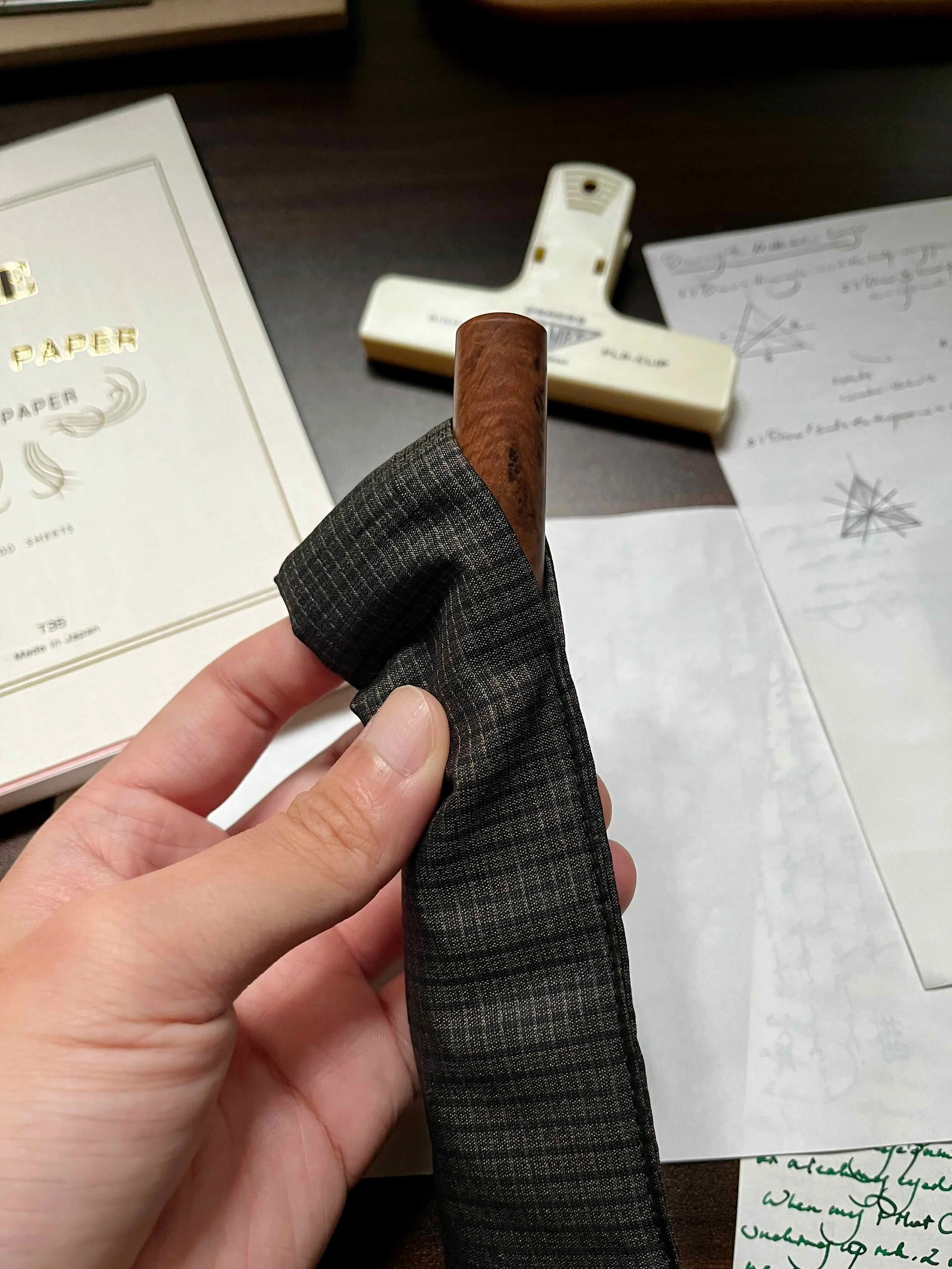
Very few cases can accommodate supersized pens. The sleeves made by Shuko Kazuno of Stylo Art do just that. It's the only one in my collection that does. Shuko provides a sleeve with every purchase of a fountain pen at Stylo Art.
The inner lining is soft, and since it only carries one pen, there's no risk of rubbing against each other. There's no zipper or magnets. A small opening is cut on the side of the sleeve. To unsheathe the pen, you have to be intentional. That the black, checked fabric doesn't turn heads only makes me want to use it more.
Nagasawa's PenStyle Kip Leather Case LL (1-pen)
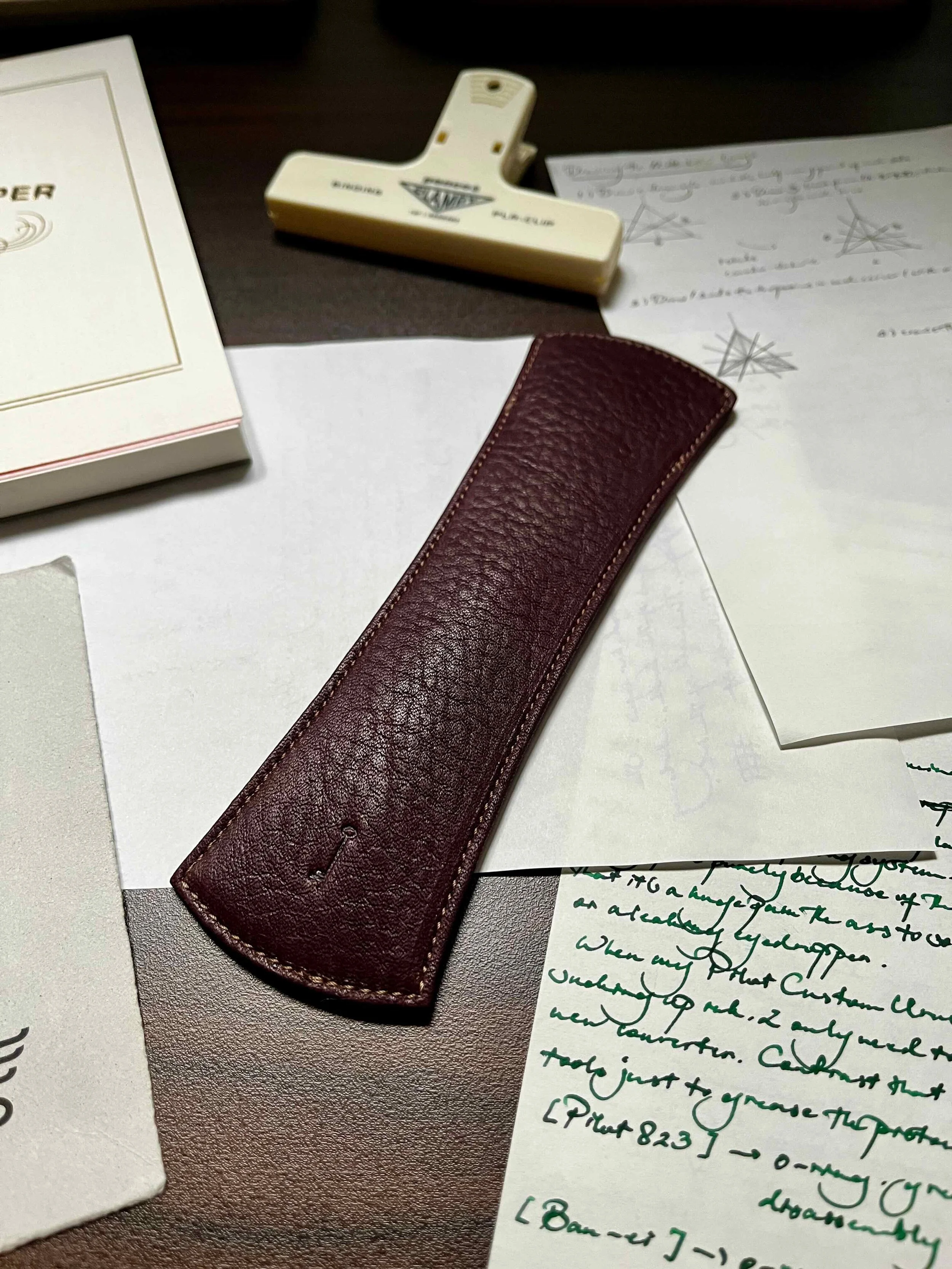
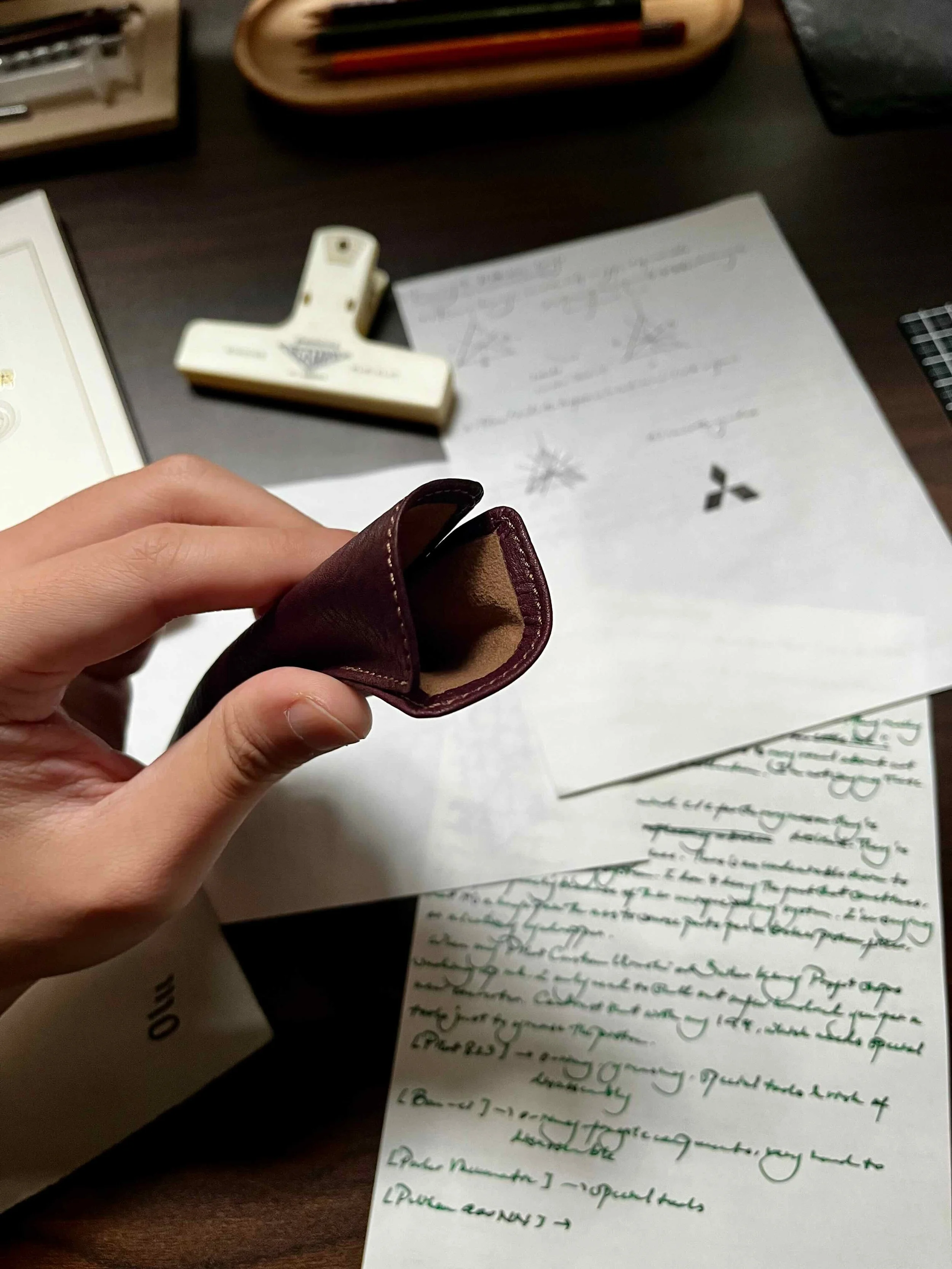
Nagasawa's single pen sleeve comes in various sizes, and mine is the LL. It's the only size that fits oversized pens, though not the super sized ones. The synthetic suede lining does a good job of protecting its contents. The sleeve opens at the top, which depending on how you look at it, can be both an upside and downside. Smaller pens could easily fall out of it if the case is carried upside down. However, the same opening allows for a quick draw. In my daily use, this hasn't been an issue at all.
The biggest selling point for me is its design. It's bordeaux, it's simple and well-made, and it doesn't turn heads.
Unnamed, concept pen case (8-pens)
The third case is designed and stitched into life by my partner. It fits my oversized pens and pocket pens, the inner lining is soft, and each pen is allotted its own sleeve. It closes by having a band on the front side to secure the main flap, so there are no zippers at all. It fits my needs perfectly, but it is not at all understated.
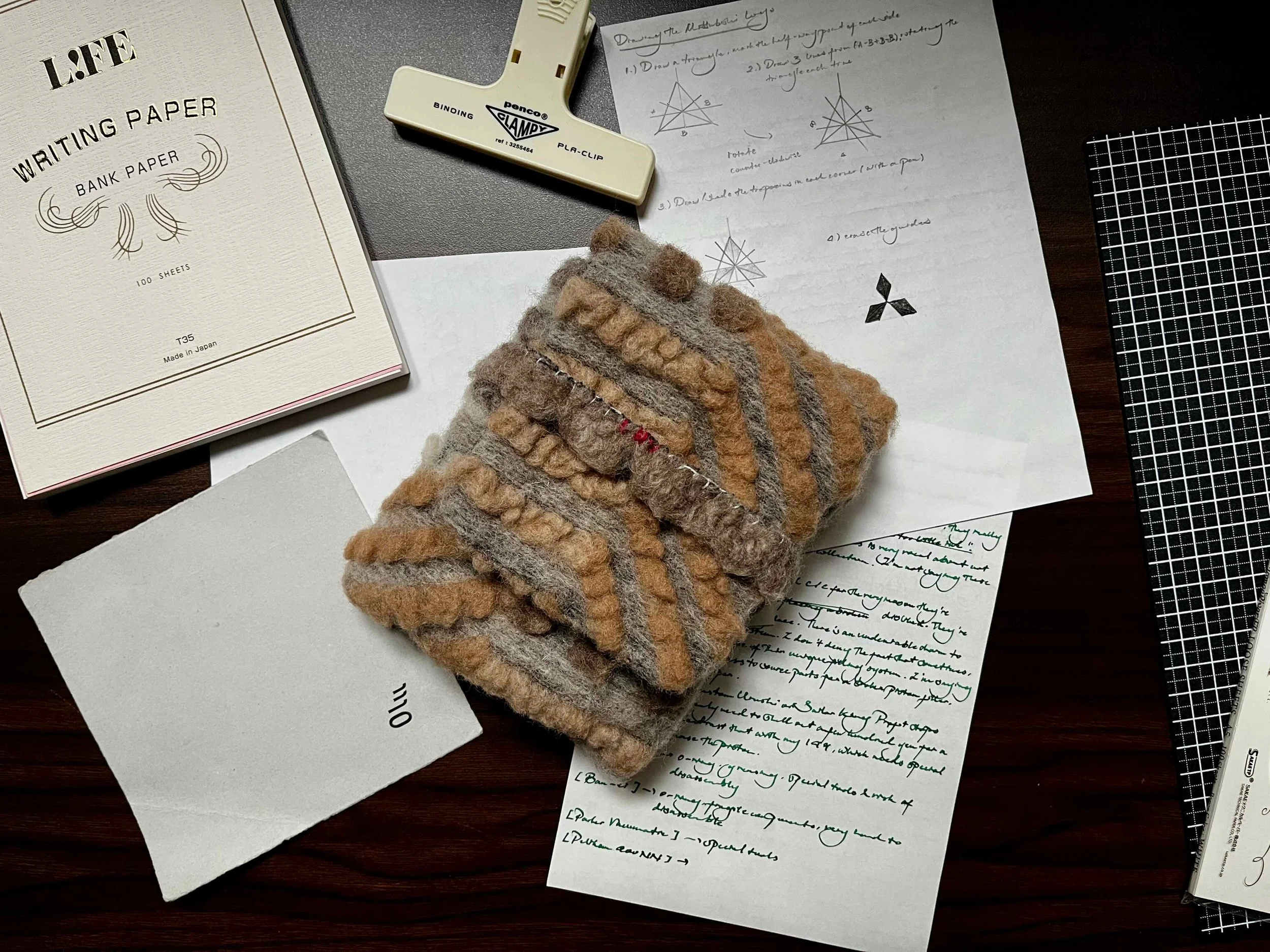
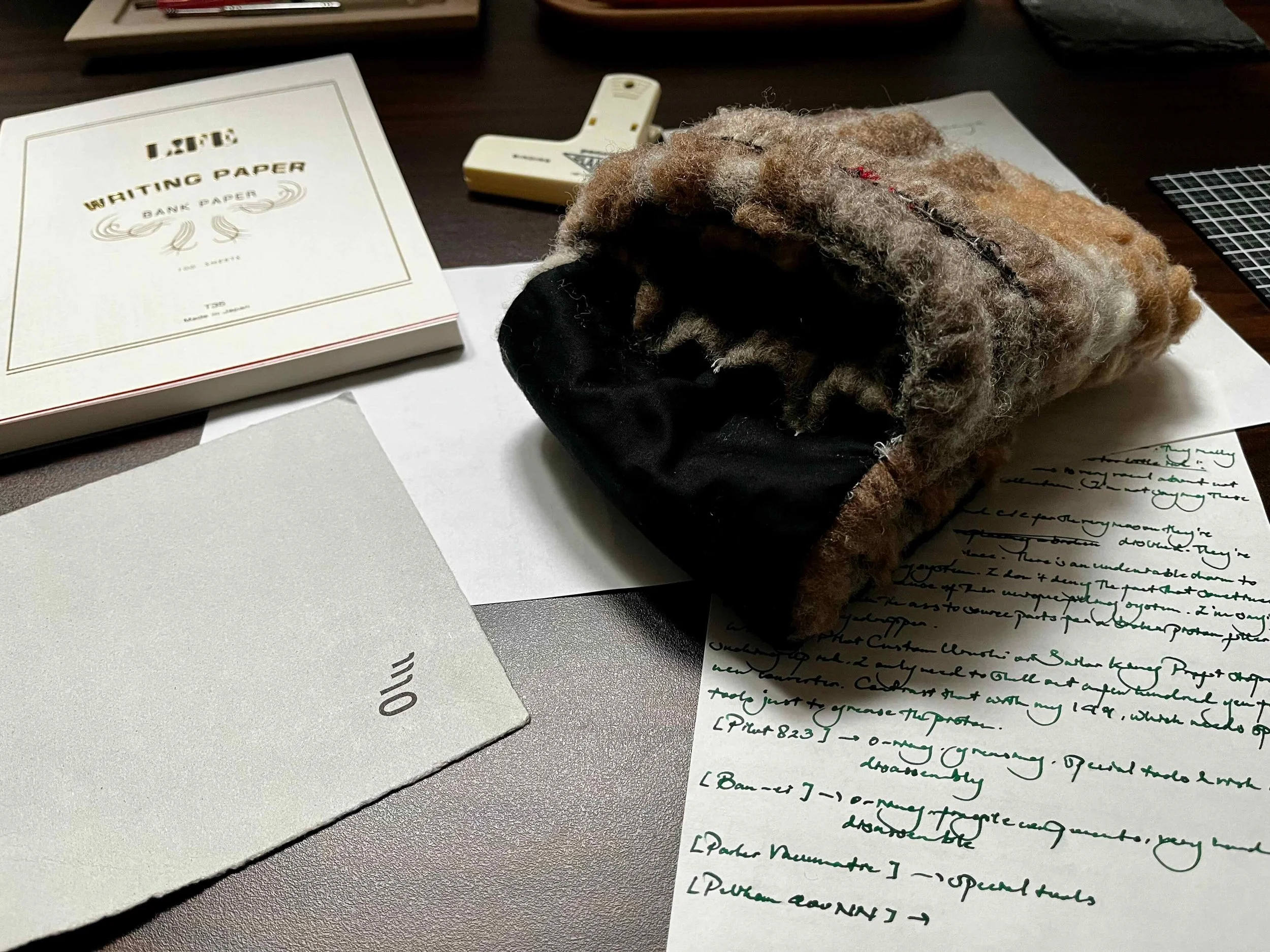
It's a prototype they made after I perhaps rambled a bit too long about pen cases.
It's not the case I carry to the office, nor is it the one I bring when on my usual routine. It is the one I bring during long travels, pen shows, and pen meets.
I'm breaking my own fifth rule.
But from the amount of interest it generates from other enthusiasts, no one seems to care.
—Pilot Custom 823, Pilot Yama-guri
-
September 2026
- Sep 28, 2026 The Montblanc in the Attic
- Sep 24, 2026 Pelikan M800
- Sep 10, 2026 Hotel Stationery: Tokyo Station Hotel
-
August 2026
- Aug 29, 2026 Sakura Craft Lab 001
- Aug 17, 2026 1969 Sailor Mini 21
-
July 2026
- Jul 20, 2026 The Pen Case I Have in Mind
- Jul 8, 2026 Kyoei’s Kiwami Writing Mat
-
June 2026
- Jun 22, 2026 In Defense of the Converter
- Jun 12, 2026 Sailor King Profit
- Jun 5, 2026 Komeda’s Coffee in Bali
-
May 2026
- May 16, 2026 Japanese Ateliers (III): Kato Seisakusho
-
April 2026
- Apr 26, 2026 Pelikan 400NN
- Apr 12, 2026 On Ebonite Feeds
-
March 2026
- Mar 26, 2026 After the Ink Is Gone
- Mar 22, 2026 Hotel Stationery: The Langham Hong Kong
- Mar 19, 2026 Hotel Stationery: The Aman Tokyo
-
February 2026
- Feb 22, 2026 Japanese Ateliers (II): Hakase
- Feb 14, 2026 Japanese Ateliers (I): Nakaya
- Feb 7, 2026 The Price of Writing in Gold
-
January 2026
- Jan 31, 2026 The True Heir
- Jan 24, 2026 Lifestyle