
Kyoei’s Kiwami Writing Mat
Kyoei's Kiwami Writing Mat Shitajiki (Kiwami ライティングマット下敷) has been on the market for a while.
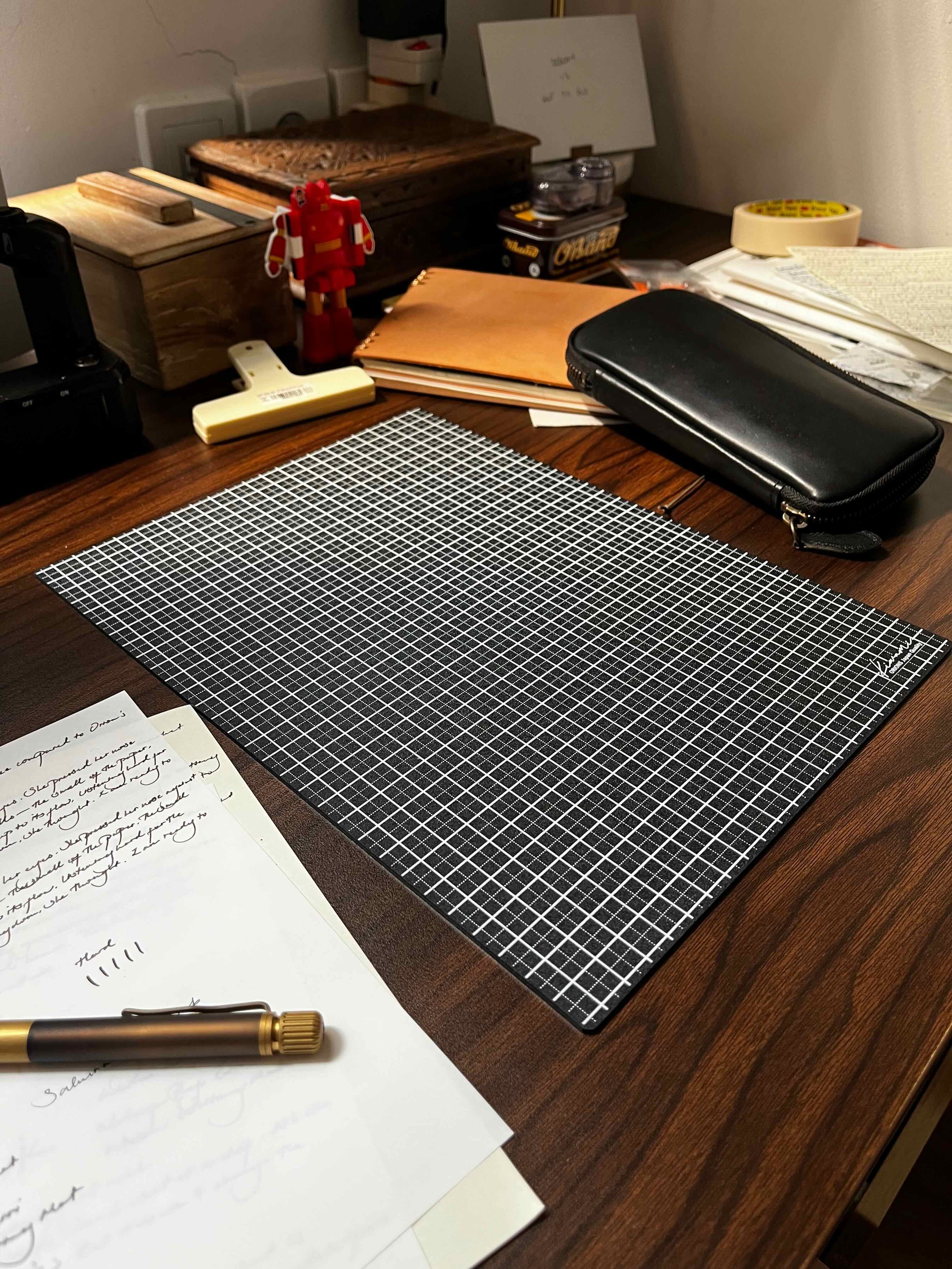
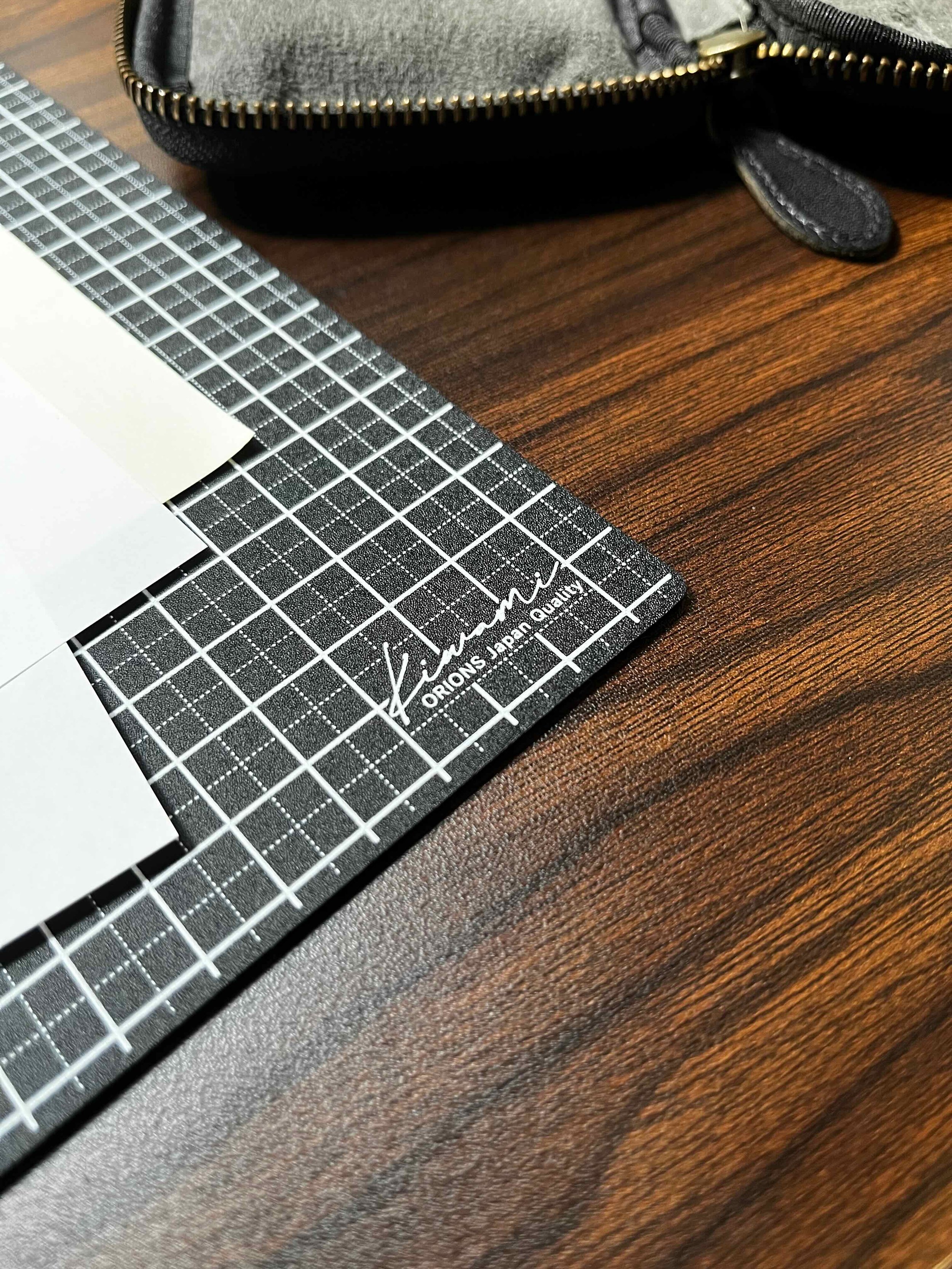
Kiwami’s shitajiki
Until recently, I never thought of it as a subject that can stand on its own. When I purchased it, I had been using a cutting mat, A4 memo pad, or anything flat and relatively large to line the uneven wood grain of my desk so that I have a flat writing surface. The shitajiki was cheap enough (~1,000円) that I bought it impulsively, started using it daily, and didn't think much about it.
The shitajiki is made out of recycled Polyvinyl Chloride (PVC). It is 2mm thick, and it comes in B6, A5, B5, and A4. For these sizes, Kiwami designed it so that it is slightly larger than its stated dimensions so a sheet of paper never hangs off the edge. There are also desk-mat-sized versions called the KAI and the PRO.
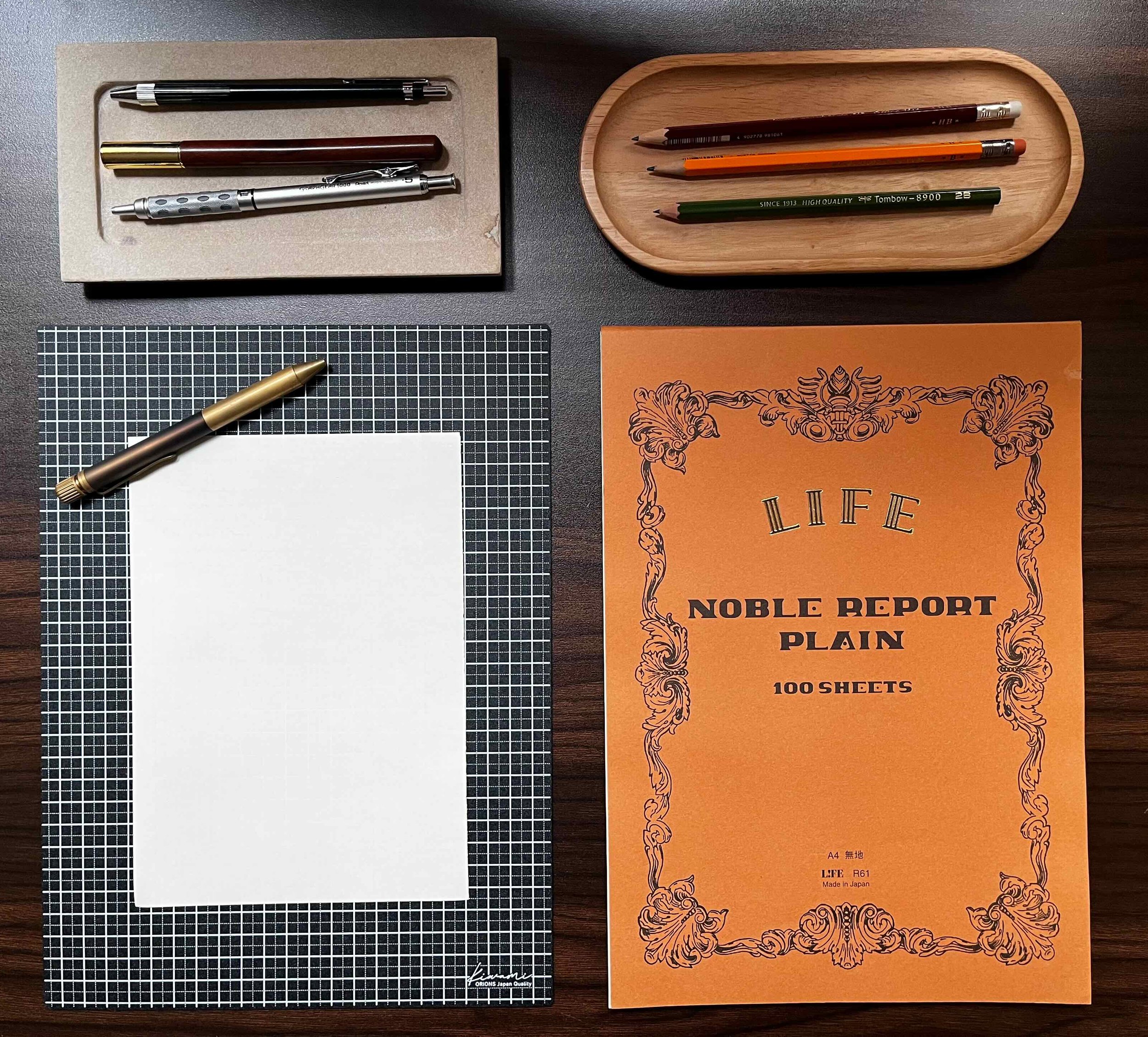
The A4 shitajiki compared. to an A5 sheet (on top) and an A4 pad (to the right).
I've used it for an extended period. To put it shortly, it enhances my writing experience to the point where I would notice its absence. I attribute it to its material and thickness.
The shitajiki's relationship to your writing can be compared to the role of a dampener to a good car. When I write with a fountain pen that has audible feedback—Sailor, Platinum—the scratch of the nib against paper drops in pitch. I find this pleasant, though that's a matter of taste.
With firmer nibs, its cushioning simulates the pleasant spring of a bouncier nib without going soft. The harder I press, the more pronounced this becomes. For someone with a light hand, like me, that effect alone might be minor. But it's dramatic with a ballpoint, a rollerball, a wooden pencil, and especially a mechanical pencil—instruments that, unlike a fountain pen, conventionally demand more pressure to begin with.
The cushioning also lets the tip sink very slightly into the surface, which, counterintuitively, improves control and grip without changing how the instrument itself feels. On the shitajiki, my pen stops exactly when I want it to stop. No overshoot. Every stroke feels more precise, and I feel no extra resistance or feedback from the nib doing it.
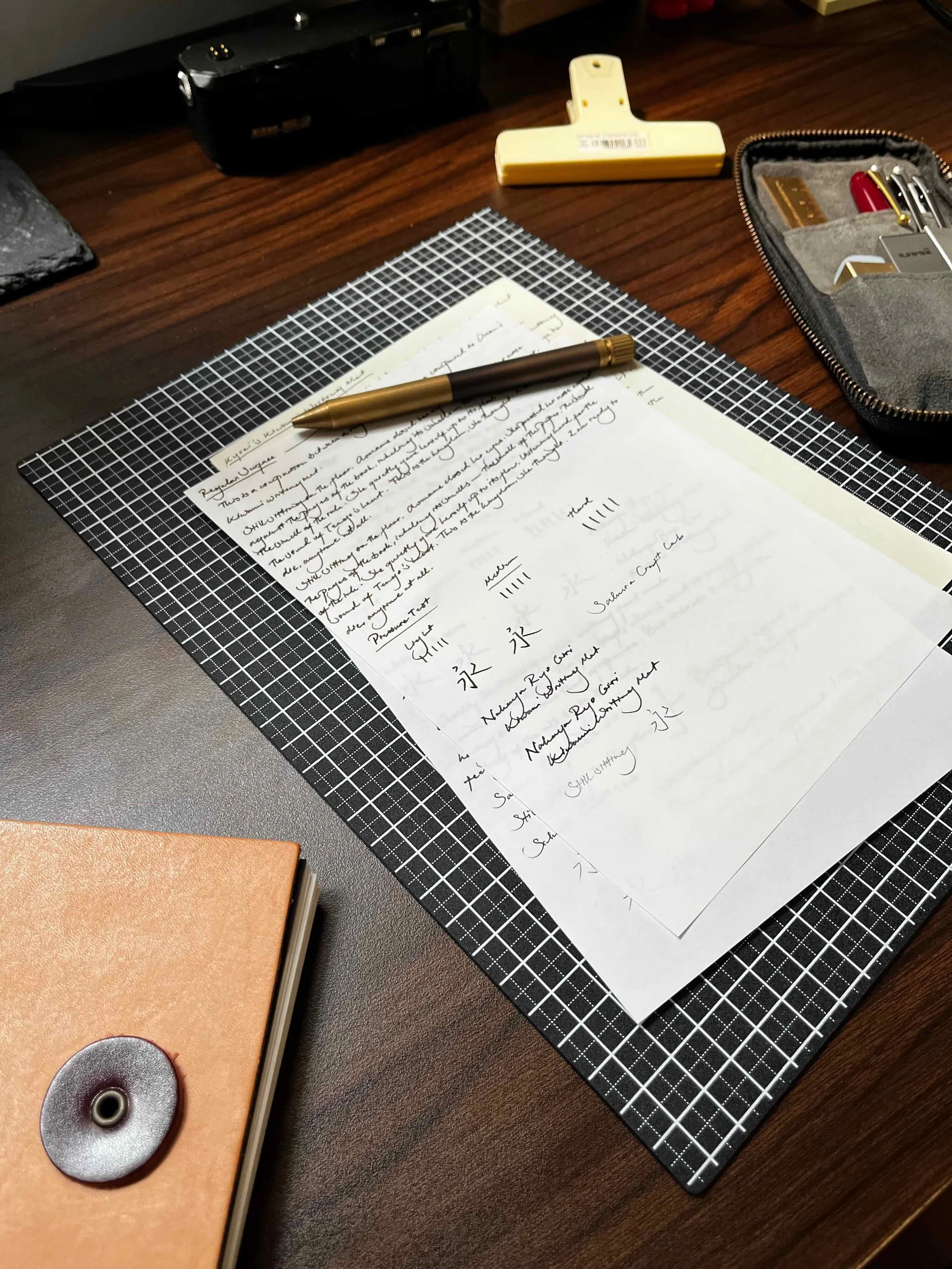
The shitajiki will never take center stage in your everyday writing. But it is one of those things you take for granted until it's gone: a wallet you've carried for a decade, the corner store that stocks the one brand of canned fish you like.
Take it away, and only then will you notice how much you've grown accustomed to it.
—Nakaya Ryogiri, Sailor Jentle Chu-Shu
-
September 2026
- Sep 28, 2026 The Montblanc in the Attic
- Sep 24, 2026 Pelikan M800
- Sep 10, 2026 Hotel Stationery: Tokyo Station Hotel
-
August 2026
- Aug 29, 2026 Sakura Craft Lab 001
- Aug 17, 2026 1969 Sailor Mini 21
-
July 2026
- Jul 20, 2026 The Pen Case I Have in Mind
- Jul 8, 2026 Kyoei’s Kiwami Writing Mat
-
June 2026
- Jun 22, 2026 In Defense of the Converter
- Jun 12, 2026 Sailor King Profit
- Jun 5, 2026 Komeda’s Coffee in Bali
-
May 2026
- May 16, 2026 Japanese Ateliers (III): Kato Seisakusho
-
April 2026
- Apr 26, 2026 Pelikan 400NN
- Apr 12, 2026 On Ebonite Feeds
-
March 2026
- Mar 26, 2026 After the Ink Is Gone
- Mar 22, 2026 Hotel Stationery: The Langham Hong Kong
- Mar 19, 2026 Hotel Stationery: The Aman Tokyo
-
February 2026
- Feb 22, 2026 Japanese Ateliers (II): Hakase
- Feb 14, 2026 Japanese Ateliers (I): Nakaya
- Feb 7, 2026 The Price of Writing in Gold
-
January 2026
- Jan 31, 2026 The True Heir
- Jan 24, 2026 Lifestyle