
Japanese Ateliers (I): Nakaya
There are three types of fountain pen makers.
Those a casual user will inevitably encounter: Sailor, Pilot, Platinum, etc. (I).
Those that only an enthusiast with time spent in the hobby would discover (II).
Finally, those that require an enthusiast to go off the beaten track (III).
This series will cover makers in categories II and III. The niche within the niche. The donut hole within a donut’s hole.
Nakaya (Category II)
Perhaps the most famous among the small ateliers, Nakaya Fountain Pens is a workshop based in Tokyo. They specialize in hand-turned ebonite fountain pens layered with urushi finishes. Tame-nuri, ishime-nuri, raden, maki-e, and more. They also accept bespoke designs submitted by the commissioner. Prices typically begin at around 100,000円.
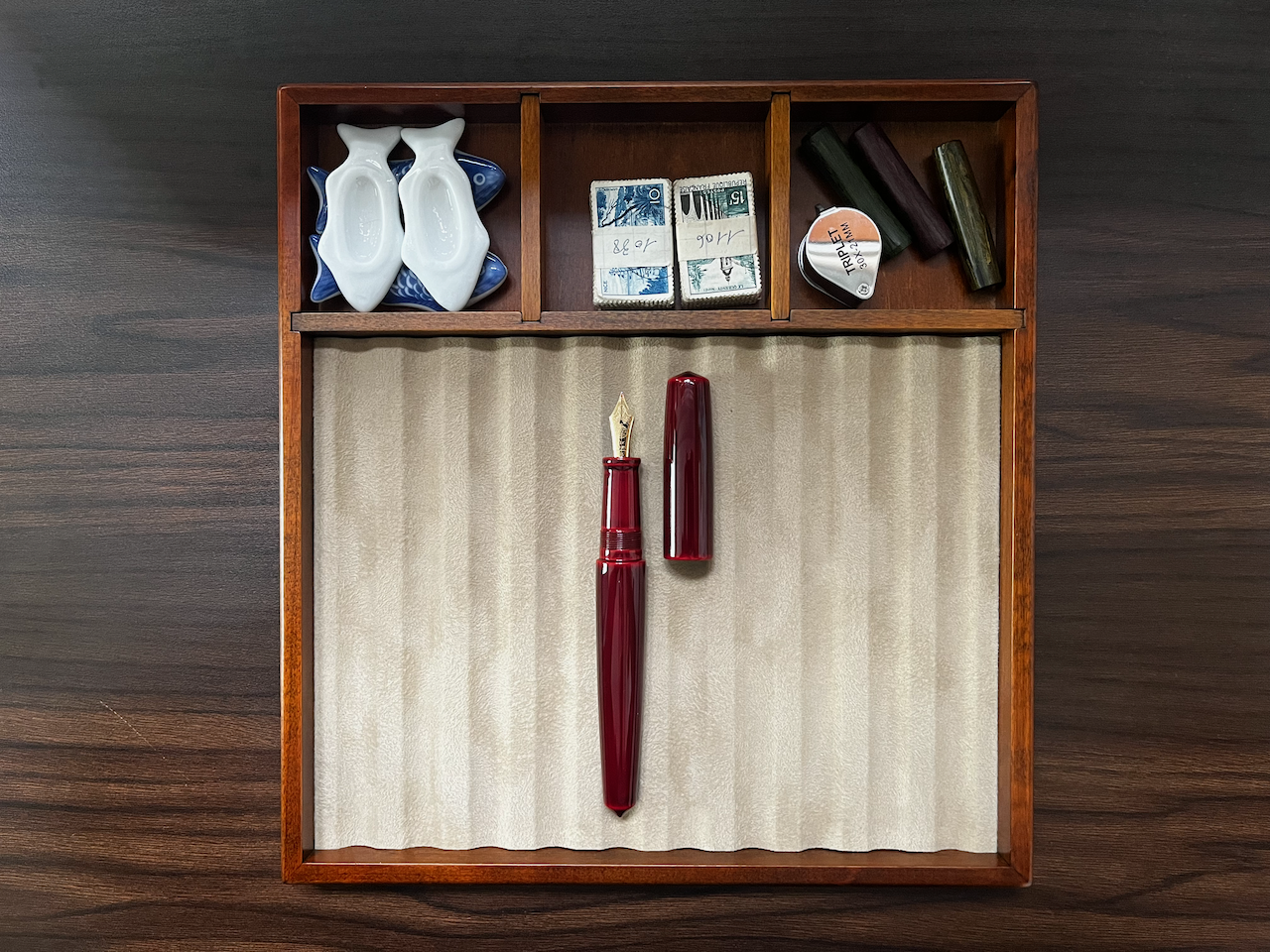
A Nakaya Ryogiri in red (akatame).
Nakaya began as a passion project by Toshiya Nakata, the grandson of Platinum Fountain Pens’ founder, Shunichi Nakata. The story goes that Toshiya banded together three retired Platinum craftsmen for one purpose: to make ebonite fountain pens. According to the blog Tokyo Inklings, this endeavour was met with very little success outside of the Japanese market. It was only later—after an urushi master became a customer—that Nakaya began incorporating urushi into their work. And once that happened, helped along by the passionate people of the message board Pentrace, Nakaya arguably did more than any single modern brand to promote urushi-finished fountain pens on a global level.
Nakaya’s first international partner was Aesthetic Bay. They are a beautiful fountain pen shop located in Singapore carrying some of the most exclusive brands. I spoke with Iyan, the shop’s second-generation owner, during a visit. He told how his father, over a single dinner, convinced Toshiya to let them become the first ever third-party retailer for Nakaya. Not even Itoya or Maruzen were permitted to carry Nakaya back then.
Iyan then pulled out Aesthetic Bay’s Nakaya dealer certificate. If my memory serves, the serial number was essentially all zeroes ending in “1”. Whatever happened at that dinner table, I wonder.
Since then, Nakaya has become a reference point in the modern atelier category.
Among enthusiasts, the name carries a particular kind of weight—limited output, long lead times, and a product that is, by design, difficult to access. Used Nakayas often appear on the secondary market at a premium to their original price. When ordering directly, lead times can stretch to twelve months due to backlog (we will soon learn that 12 months is short, relative to other makers I’ll discuss). Regardless, the quality is nothing short of spectacular. Their tame-nuri finishes are the best I’ve ever seen in my years of collecting, and each pen has a quiet, individual soul that’s hard to explain without sounding annoying. It helps that each nib is tuned to the user’s writing preferences. Truly, to their motto: For Your Hand Only.
One common misconception is that Nakaya is simply Platinum’s flagship line. With two generations of the Nakata family across both makers and shared components, it’s easy to see why the confusion persists. Platinum has its own urushi-over-ebonite line under the Izumo. The Izumo uses a different nib configuration (18K with Izumo specific engraving), and historically drew from Platinum’s higher end nib family (the President). Nakaya, meanwhile, uses the nibs from Platinum’s 3776 (14K) fountain pens, engraved for Nakaya.
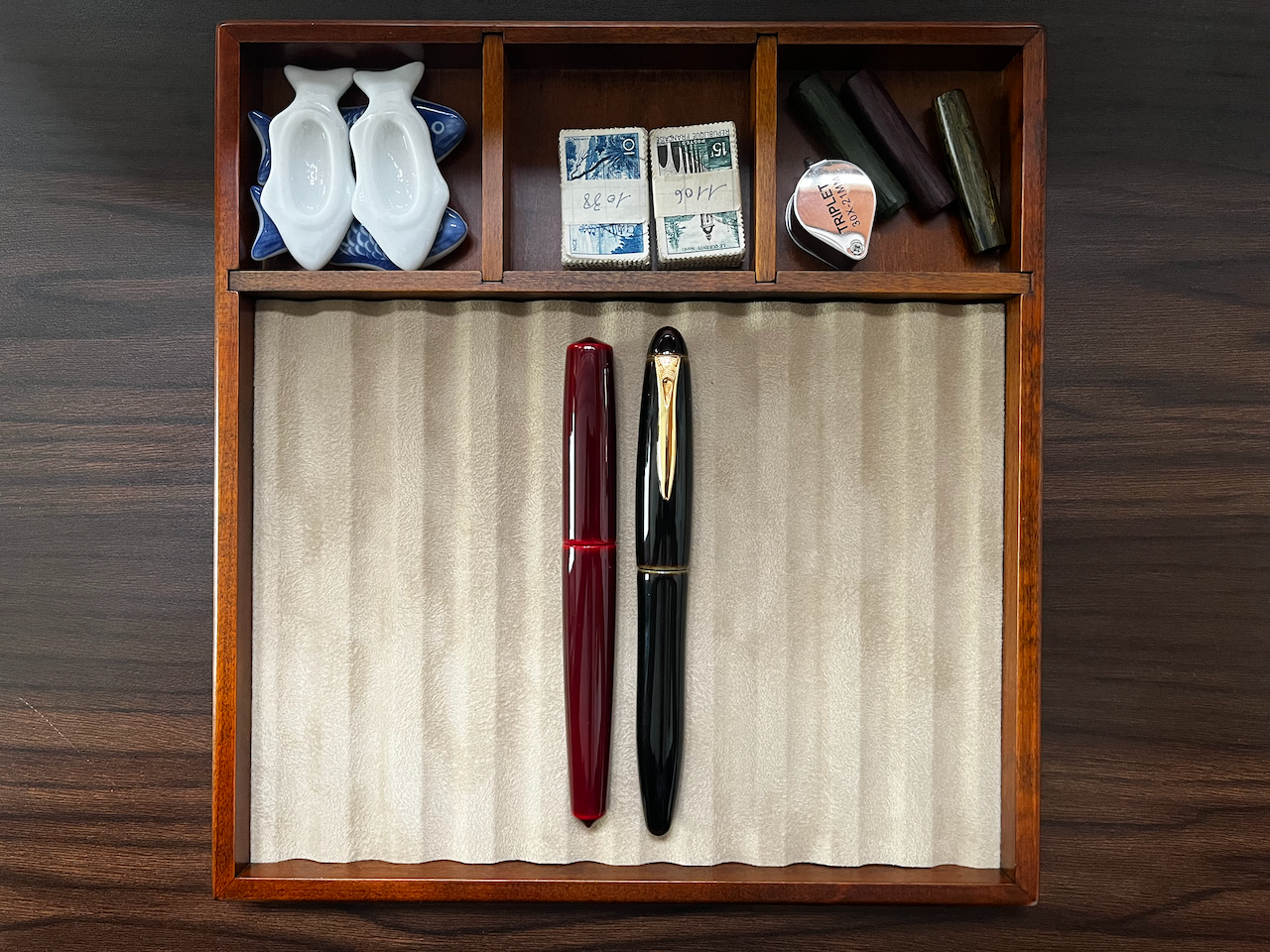
Left to right: Nakaya Ryogiri, Platinum Izumo
Nakaya does not have a storefront. If a potential customer wants to hold a Nakaya before buying, there are licensed retailers. Though, their popularity means there’s rarely any stock. Nakaya does, however, hold demonstration sales event throughout the year in Japan, and sometimes (rarely) with their international dealers.
At these events, Nakaya offers a pen clinic service for existing customers, and the chance to purchase from event-only inventory without the usual wait. Slots are very limited, and popular models sell out quickly. Many people choose to wait until they can attend one of these events so a traveling Nakaya nibmeister can tune their pen on the spot. Each attendee gets roughly thirty minutes for adjustments, and Japanese is strongly recommended if you want to communicate your preferences precisely.
When purchasing at an event, you also get a glimpse into the final stages of how a Nakaya is prepared before it goes out. The nib is checked against the buyer’s preference and tuned by the master’s hand. Then, the nib and feed are heat-set over a kettle of boiling water to ensure a snug fit. The overall process is incredibly entertaining to watch; I ended up staying to watch other people’s turns at the event.
By the time you’ve seen the pen handled that way—checked, tuned, and prepared in full view—it becomes harder to reduce it to its components. Yes, the architecture is familiar. But the experience of the object is not. There’s a certain appeal to Nakaya that’s hard to describe. At its essence, a Nakaya is a Platinum 3776. But far from it, it is.
—Sailor King Profit, Kobe Bokko
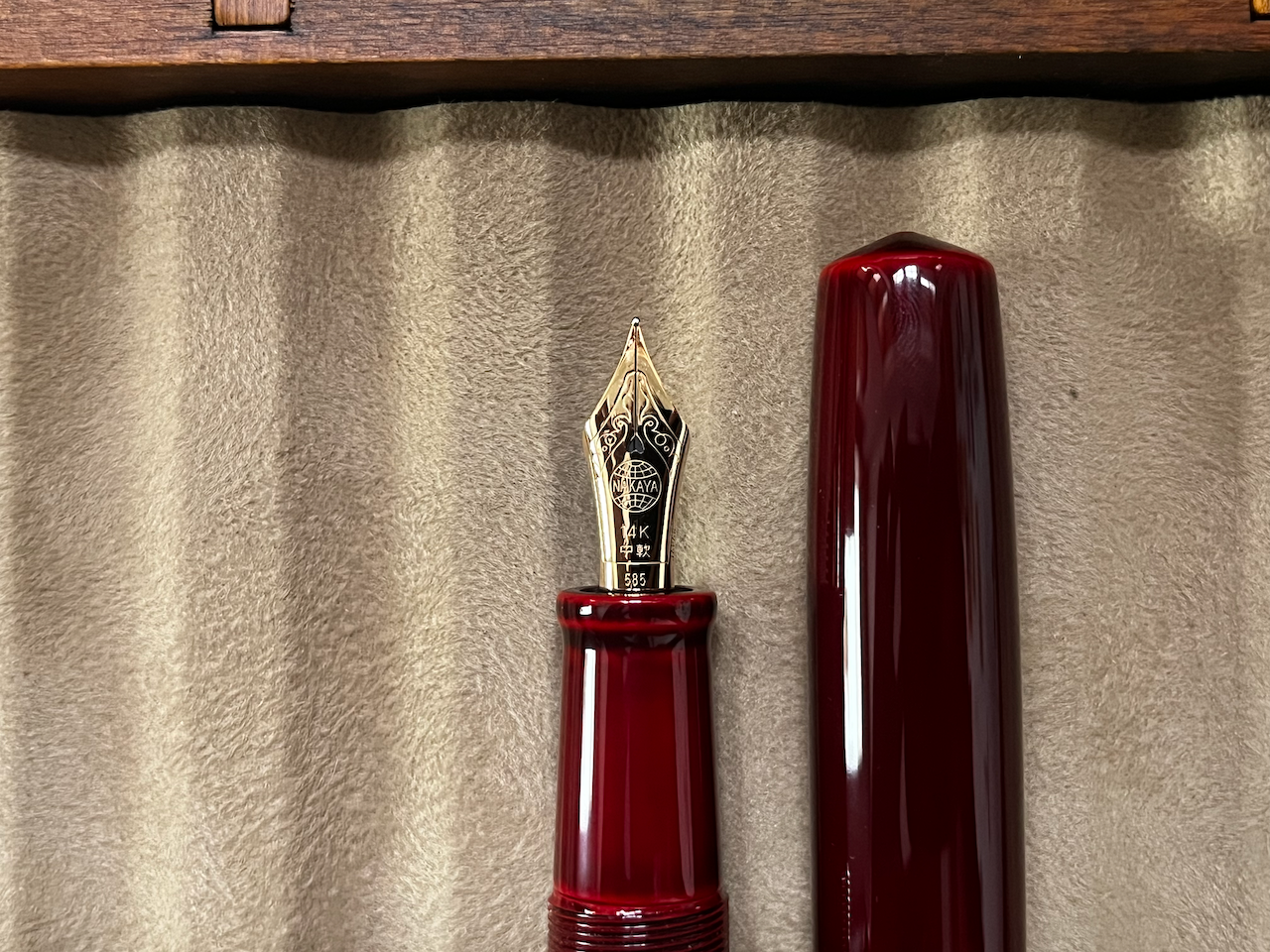
Closeup of a Nakaya nib (soft medium)
-
September 2026
- Sep 28, 2026 The Montblanc in the Attic
- Sep 24, 2026 Pelikan M800
- Sep 10, 2026 Hotel Stationery: Tokyo Station Hotel
-
August 2026
- Aug 29, 2026 Sakura Craft Lab 001
- Aug 17, 2026 1969 Sailor Mini 21
-
July 2026
- Jul 20, 2026 The Pen Case I Have in Mind
- Jul 8, 2026 Kyoei’s Kiwami Writing Mat
-
June 2026
- Jun 22, 2026 In Defense of the Converter
- Jun 12, 2026 Sailor King Profit
- Jun 5, 2026 Komeda’s Coffee in Bali
-
May 2026
- May 16, 2026 Japanese Ateliers (III): Kato Seisakusho
-
April 2026
- Apr 26, 2026 Pelikan 400NN
- Apr 12, 2026 On Ebonite Feeds
-
March 2026
- Mar 26, 2026 After the Ink Is Gone
- Mar 22, 2026 Hotel Stationery: The Langham Hong Kong
- Mar 19, 2026 Hotel Stationery: The Aman Tokyo
-
February 2026
- Feb 22, 2026 Japanese Ateliers (II): Hakase
- Feb 14, 2026 Japanese Ateliers (I): Nakaya
- Feb 7, 2026 The Price of Writing in Gold
-
January 2026
- Jan 31, 2026 The True Heir
- Jan 24, 2026 Lifestyle