
The True Heir
Urban legends—true or not—are among my favourite things to read. At the very least, they entertain. At their best, they offer a small insight, and gently dare us to believe. Such is the case with the story of how Pilot’s Custom 823 was conceived.
As the anecdote goes, the scene takes place inside Pilot’s headquarters in Tokyo. A meeting of executives. A new Capless model being introduced. And Pilot’s head of R&D—while taking notes—doing so with a first-generation, tortoiseshell Pelikan M800. The room, we are told, fell quiet as the CEO noticed the sheer brazenness. Then he smiled and produced his own M800 from his jacket pocket.
Both men agreed on something: that the first-generation M800—then fitted with a 14C nib—embodied the ideals of a fountain pen. They also agreed on what had been lost. In the late 1990s, Pelikan moved nib production to Bock and switched to stiffer 18C nibs with different writing characteristics. The “ideal,” in their telling, had been compromised. Fortune, however, favours the bold. If Pelikan would not preserve it, perhaps Pilot could.
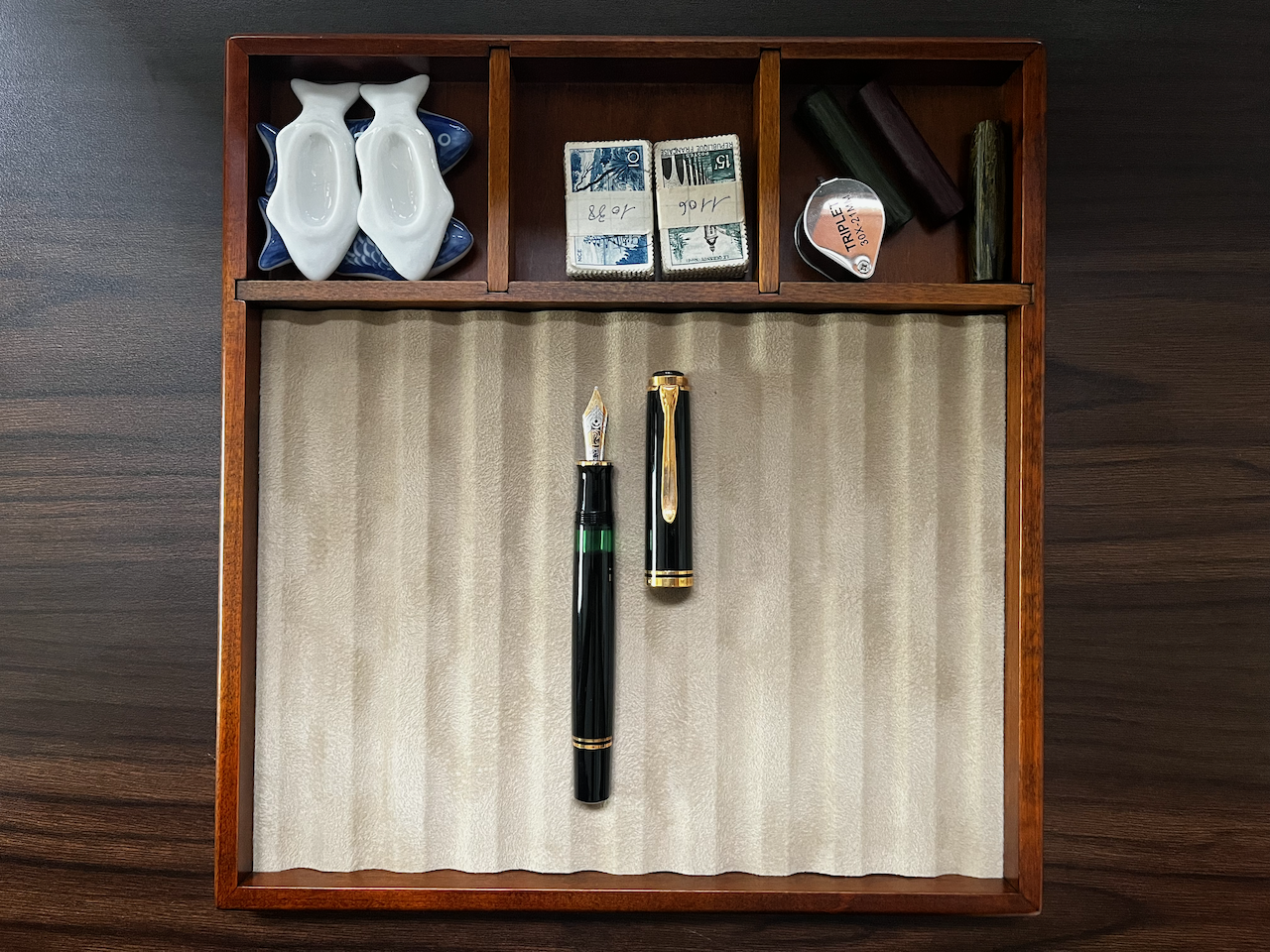
A first generation Pelikan M800
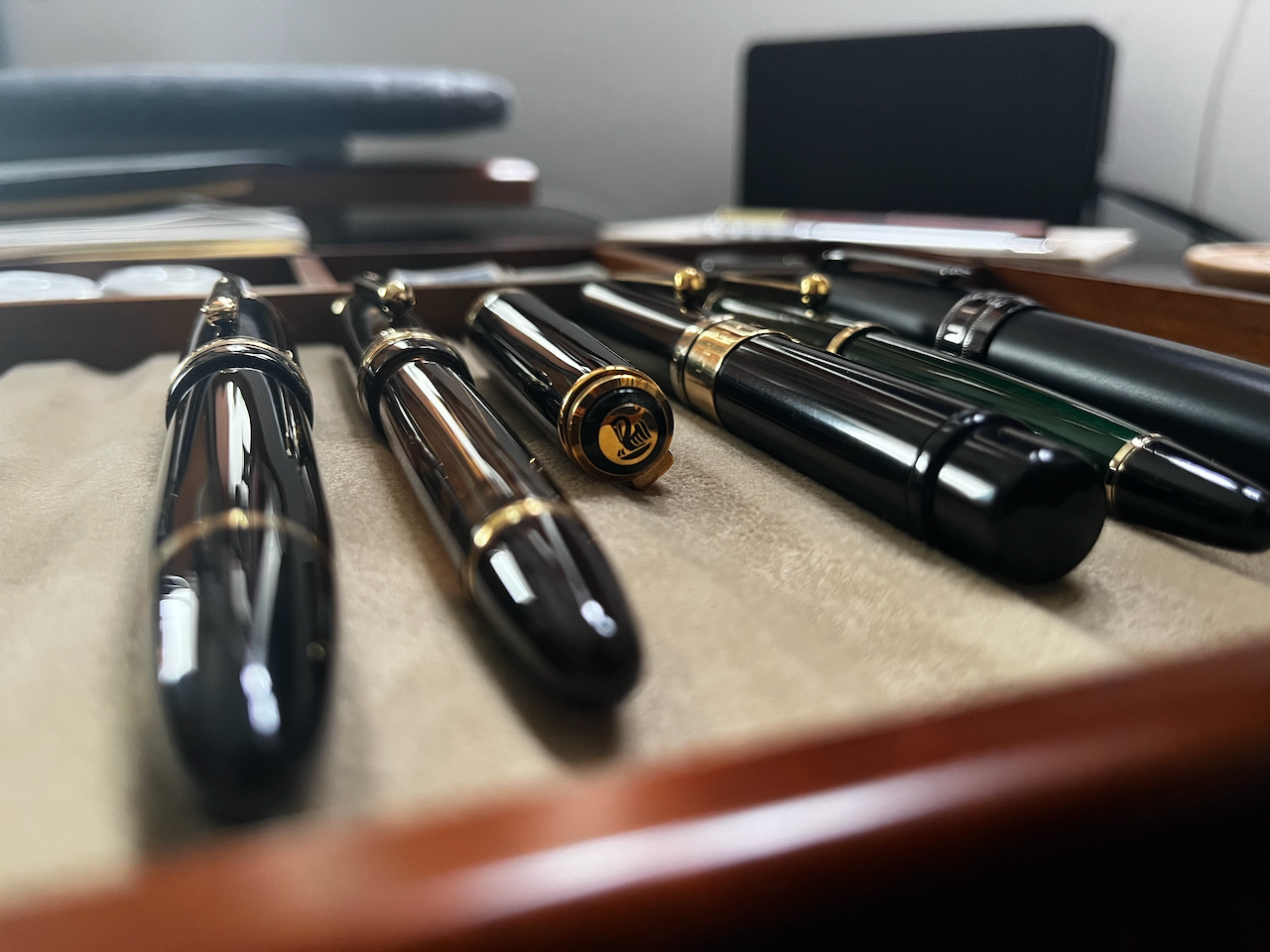
The older Pelikans had their chick logo on a medallion instead of today’s laser engraving.
Pilot’s answer was the Custom 823: a pen engineered around its own filling system and an in-house #15 nib. Pilot’s executives wanted to dethrone the M800 as the most popular fountain pen in Japan. To ensure a warm reception, they supposedly fitted Pilot #15 nibs (with Pelikan engravings) onto M800 bodies and distributed them among Pelikan fans.
The test was simple. Can anyone tell the difference?
I happen to be in a position to answer that question. I own both a Custom 823 and a first-generation M800 with a 14C nib. Side by side, the 823 feels more slender in the hand. The nibs are identical in size. I have not attempted to fit a Pilot #15 nib onto the M800—there are risks involved, and I am not in a hurry to discover new ways to ruin a good pen. Perhaps one day.
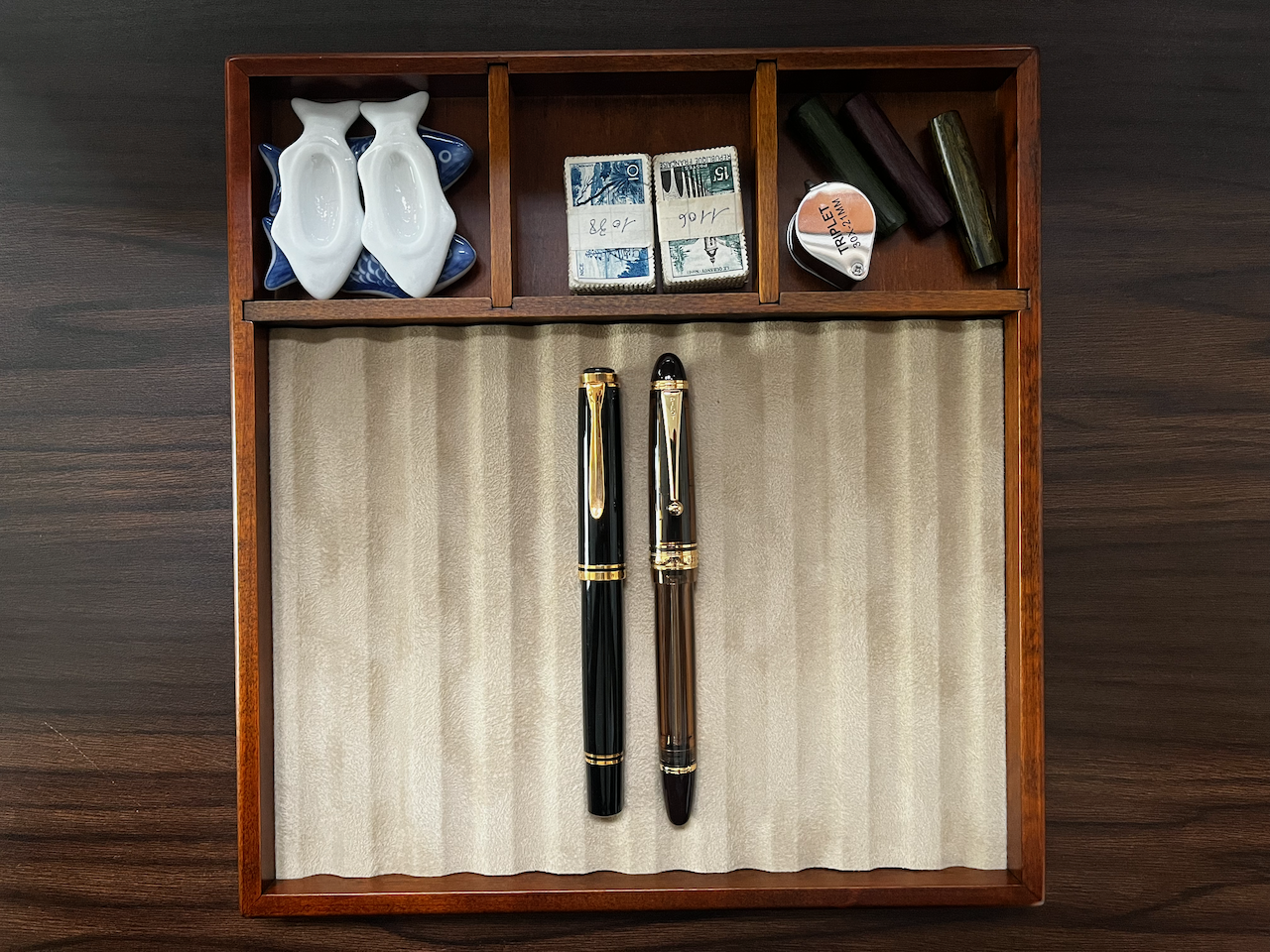
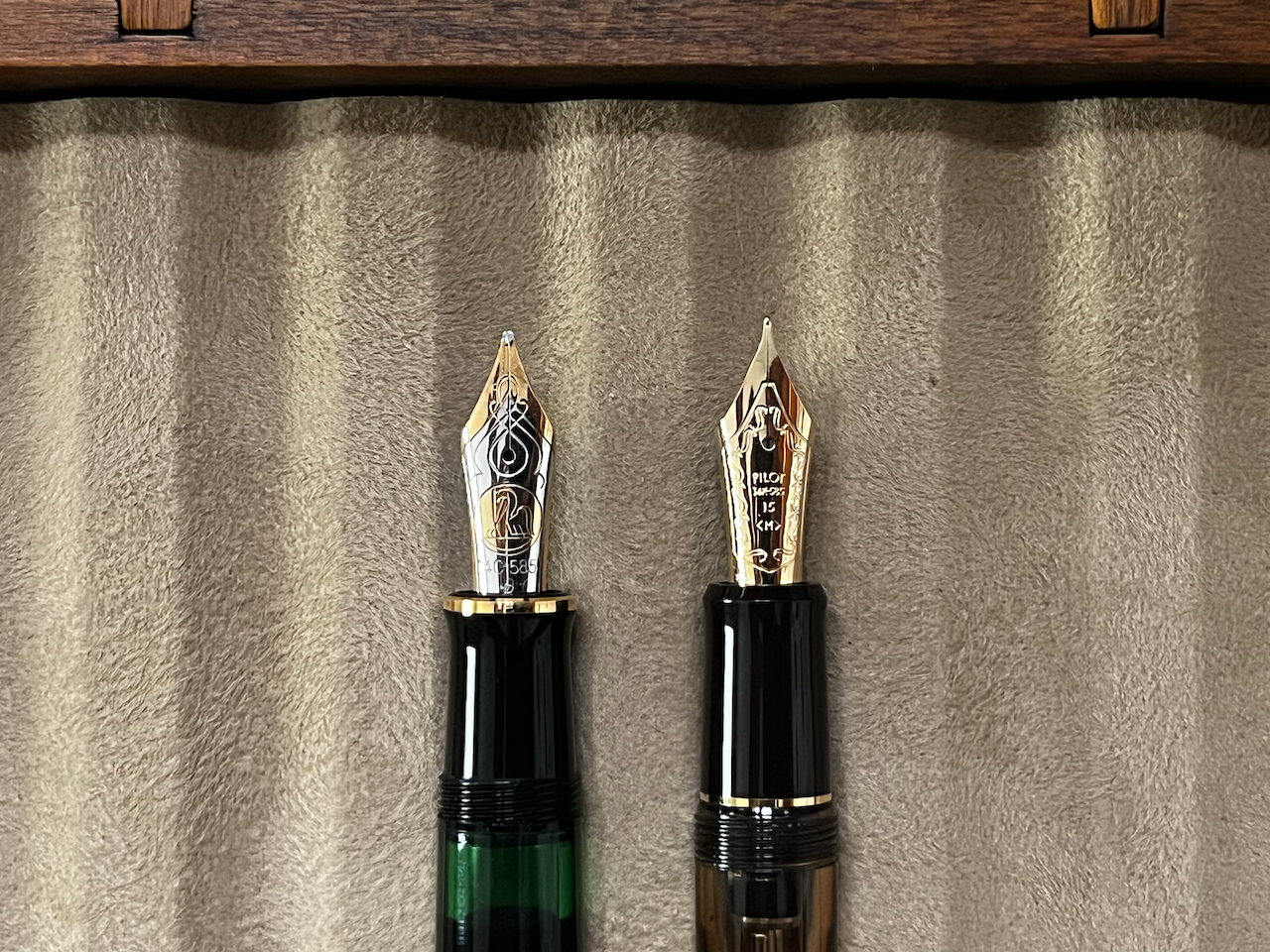
Left to right: Pelikan M800, Pilot Custom 823
In terms of softness, the 14C M800 edges out the Custom 823. The story has an explanation for that too. Pilot, it claims, later stiffened their #15 nibs after learning why Pelikan did: too many 14C M800 nibs were bent or splayed by users accustomed to the pressure of ballpoints. Times change. Writing habits change with them.
Is the story true? I can’t confirm.
Fudefan notes that the stationery magazine Shumi-no bungubako (趣味の文具箱) continues to rank the M800—even in its modern 18C form—as the most preferred fountain pen among its readers. If the legend is accurate, then Pilot’s endeavour failed.
Somewhere, no doubt, a holdout still believes that is where the story ends.
And yet, since its introduction, the Custom 823 has gone on to establish itself as one of the most commonly recommended fountain pens in the world, alongside the LAMY 2000.
If there is any truth to the anecdote, I suspect those executives would be satisfied anyway. They may have failed to dethrone a king. But they succeeded in building an heir.
My thanks to Mr. Bruno Taut of Crónicas Estilográficas.
—Pilot Custom Urushi, STAs Kurogo
-
September 2026
- Sep 28, 2026 The Montblanc in the Attic
- Sep 24, 2026 Pelikan M800
- Sep 10, 2026 Hotel Stationery: Tokyo Station Hotel
-
August 2026
- Aug 29, 2026 Sakura Craft Lab 001
- Aug 17, 2026 1969 Sailor Mini 21
-
July 2026
- Jul 20, 2026 The Pen Case I Have in Mind
- Jul 8, 2026 Kyoei’s Kiwami Writing Mat
-
June 2026
- Jun 22, 2026 In Defense of the Converter
- Jun 12, 2026 Sailor King Profit
- Jun 5, 2026 Komeda’s Coffee in Bali
-
May 2026
- May 16, 2026 Japanese Ateliers (III): Kato Seisakusho
-
April 2026
- Apr 26, 2026 Pelikan 400NN
- Apr 12, 2026 On Ebonite Feeds
-
March 2026
- Mar 26, 2026 After the Ink Is Gone
- Mar 22, 2026 Hotel Stationery: The Langham Hong Kong
- Mar 19, 2026 Hotel Stationery: The Aman Tokyo
-
February 2026
- Feb 22, 2026 Japanese Ateliers (II): Hakase
- Feb 14, 2026 Japanese Ateliers (I): Nakaya
- Feb 7, 2026 The Price of Writing in Gold
-
January 2026
- Jan 31, 2026 The True Heir
- Jan 24, 2026 Lifestyle