
The Montblanc in the Attic
Very few names in the fountain pen world can match Montblanc’s heritage and standing. It is, by far, the most recognizable fountain pen brand in the world today. Like any luxury product, however, it is also a brand that divides people.
There are two types of Montblanc collectors I’ve encountered so far. The first collect vintage Montblancs exclusively. The second collect anything with the white star, including new limited editions that can fetch hundreds of thousands, and even millions, of Japanese yen. And then there are the detractors: those who swear off Montblanc products because of its exclusion of everyone but the upper echelons of the market.
Collector or not, it is hard to argue against Montblanc’s success in the market. It has spent decades building a luxury empire around the fountain pen. It has also expanded into watches, fragrances, wallets, leather goods, and other luxury accessories. Despite this success, some see the strategy employed as a perversion of Montblanc’s original identity: in its pursuit of luxury, the company abandoned its core purpose of producing fountain pens that were excellent, rather than merely expensive.
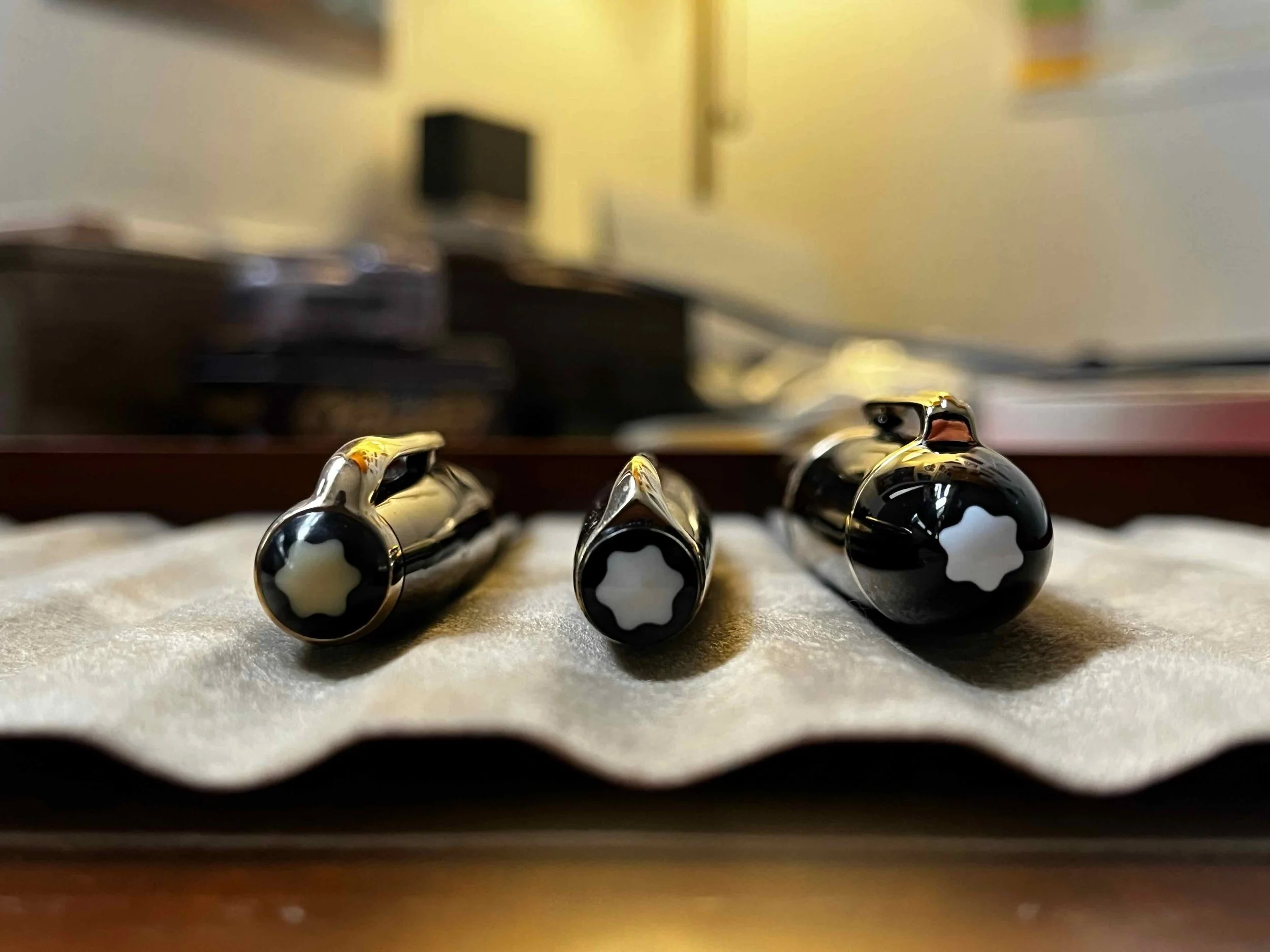
Three generations of Montblanc fountain pens. Left to right: 1950’s, 1960’s, 1970’s.
Montblanc’s pivot towards luxury goods came during a period when fountain pens were already in decline. Had it stubbornly adhered to its original identity and values, without finding new sources of profit, it would only have been a matter of time before the brand ceased to exist. You can almost sympathize and respect the operators of Montblanc for doing what was necessary. Then why the scrutiny?
Among my Montblanc fountain pens are a 042G (the ‘Monte Rosa’), an entry-level in the 1950s, and a 254, a mid-range fountain pen from roughly the same period. They represent the qualities that defined the ideal writing instruments of that era; soft gold nibs, generous ink flow, and piston filling. By 1960, both models had been discontinued.
On its website, Montblanc describes the 1960s as a period that forced the company to think differently because of “market pressures” and the rise of “mass produced products.” They probably mean ballpoints. In a shrinking market, it makes sense to streamline products that are not performing well. Perhaps the second- and third-tier 2XX and 3XX were those products. But even if eliminating them made commercial sense, it is understandable why many people mourn what was lost.
Vintage Montblancs from before the 1960s embodied an ideal: to make the best possible writing instruments. Even seventy years later, the piston mechanism on my 042G and 254 feels tight, confident, well-built. The ink window is intact, and the nib remains untarnished and pleasurable to write with. I wouldn’t be surprised if these pens last another seventy years. Neither was a high-end model in its day.
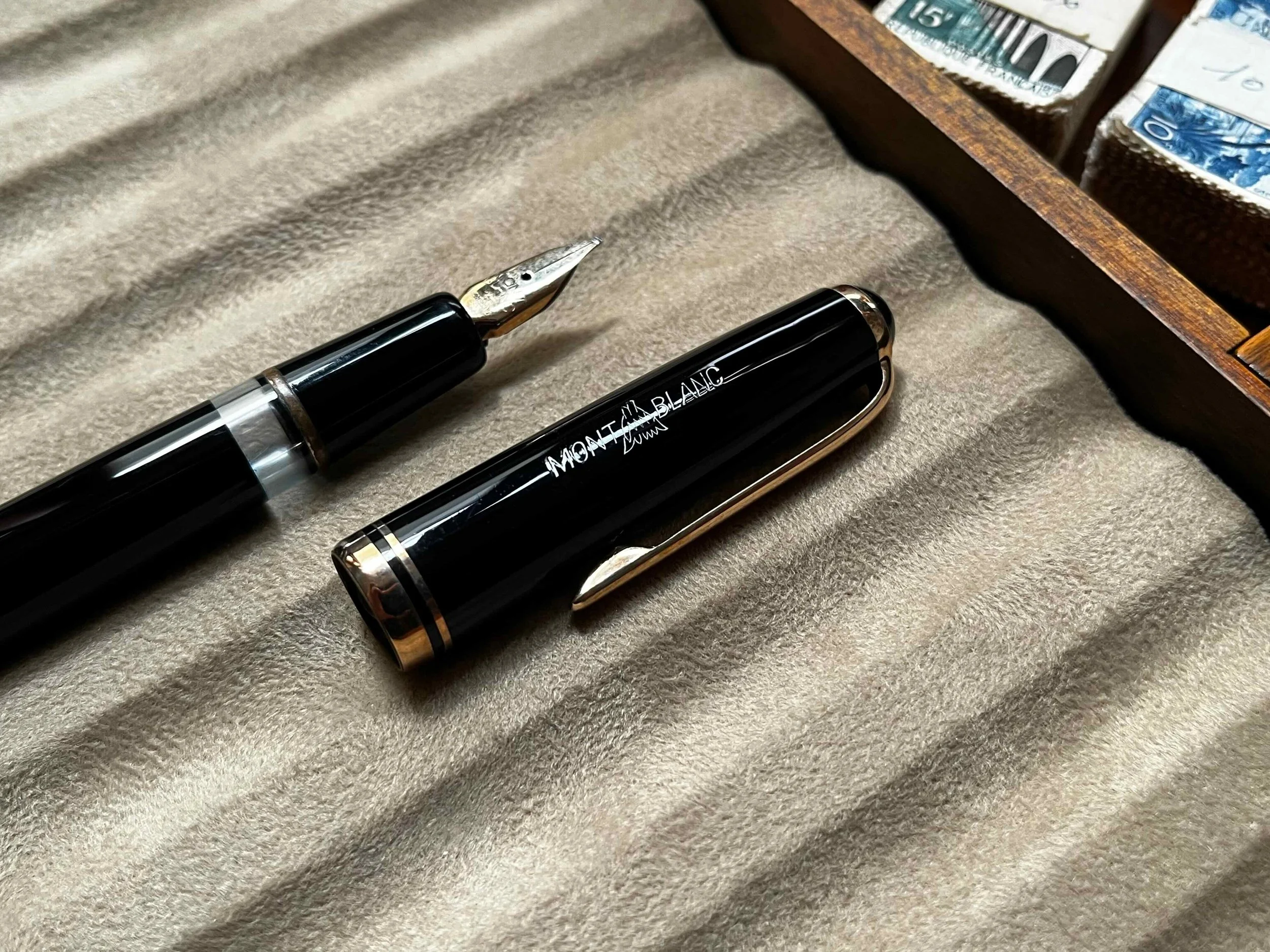
The original Montblanc logo. This style of engraving and logo was recently revived in ‘The Origin’ collection.
To an extent, the Montblanc of today still believes in that vision. Otherwise, it would have moved production out of Hamburg a long time ago. But it has made a key alteration: To make the best possible writing instruments that may never be used.
Since the 1990s, the company has gone from strength to strength by introducing limited editions of its existing pens. The Writers Edition, Patron of Art, and Great Characters are essentially Montblanc 146s given complex embellishments, turning a writing instrument into collectible pieces of jewelry.
Montblanc’s campaign still say “Let’s Write”. But many of these pens have never been written with. Most of the time, they sit inside their box or in a pen case unused. It is the consequence of making writing instruments akin to jewelry. The act of writing itself must be then justified by the occasion.
Montblanc still offers its iconic Meisterstuck line of fountain pens today—along with the 144 and 146—the 149 remains the brand’s poster child. It is the only product in its current lineup that can be traced directly to Montblanc’s bygone era in the 1950’s, when it produced some of the best fountain pens there ever were—the 139L, ‘silver rings’ 149, 252, 254, 256, 146G, among others. It’s undeniable that the 149 is what made Montblanc great, but it was never what made the brand.
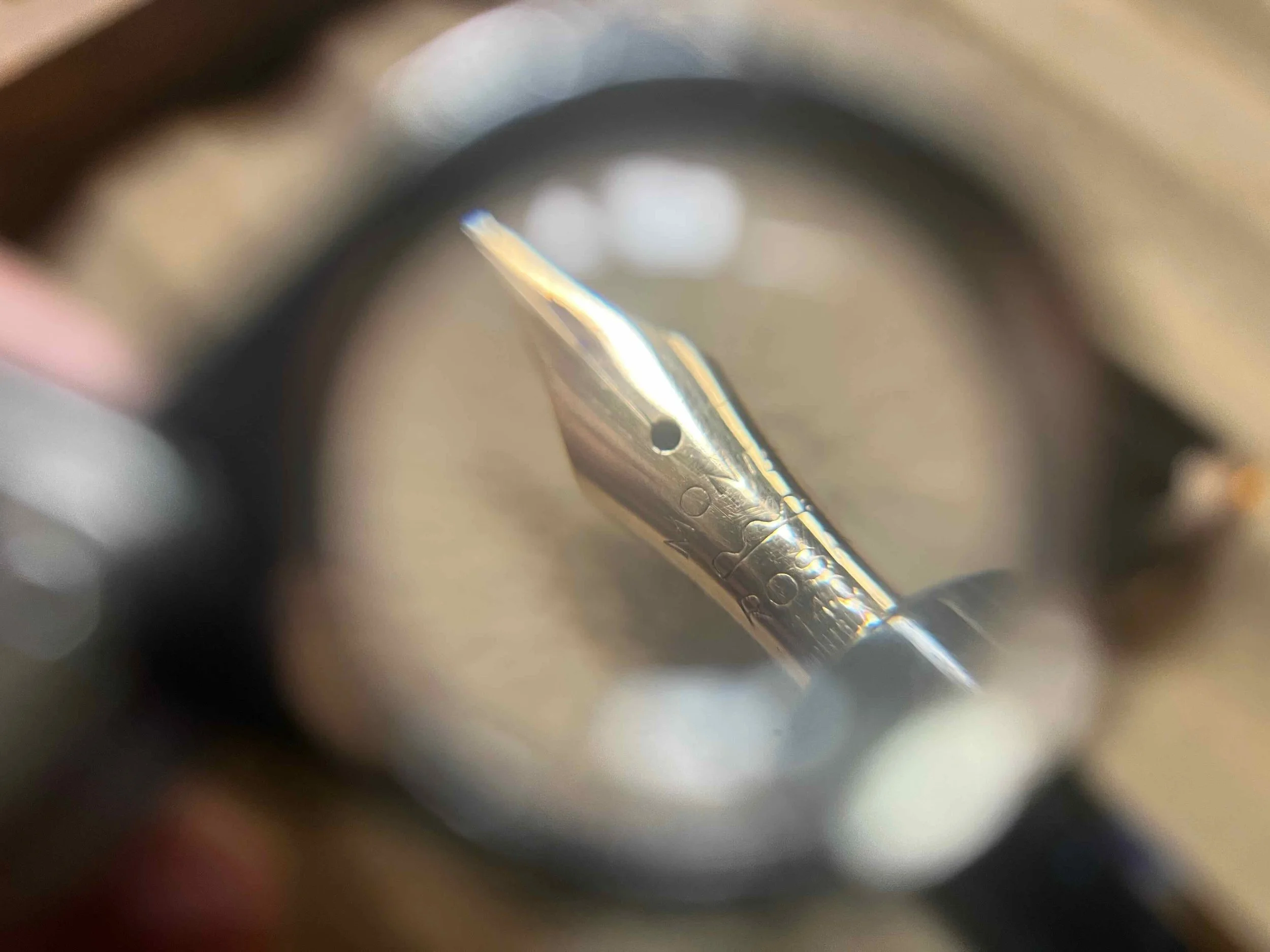
The 042G nib reads MONTE / ROSA.
The iconic 149 put Montblanc on the map. But it is rarely the Montblanc you find amongst old belongings in the back of a drawer or in the attic. That would be the second and third-tier Montblancs: the 042G, 344, 24, and countless others.
These are the Montblancs that most of our grandparents could afford. The pens they might still hold with a smile as they tell us the story of how it came into their possession.
Ironically, it doesn't matter that there are passionate collectors or passionate detractors. Montblanc’s largest customer base is neither. It is the parent of a soon-to-graduate son or daughter. The lawyer celebrating a promotion. The politician seeking to impress.
None of them consider themselves pen people. And they never intend to buy a second.
—Sheaffer Lifetime Flat Top Junior, Pelikan Royal Blue
-
September 2026
- Sep 28, 2026 The Montblanc in the Attic
- Sep 24, 2026 Pelikan M800
- Sep 10, 2026 Hotel Stationery: Tokyo Station Hotel
-
August 2026
- Aug 29, 2026 Sakura Craft Lab 001
- Aug 17, 2026 1969 Sailor Mini 21
-
July 2026
- Jul 20, 2026 The Pen Case I Have in Mind
- Jul 8, 2026 Kyoei’s Kiwami Writing Mat
-
June 2026
- Jun 22, 2026 In Defense of the Converter
- Jun 12, 2026 Sailor King Profit
- Jun 5, 2026 Komeda’s Coffee in Bali
-
May 2026
- May 16, 2026 Japanese Ateliers (III): Kato Seisakusho
-
April 2026
- Apr 26, 2026 Pelikan 400NN
- Apr 12, 2026 On Ebonite Feeds
-
March 2026
- Mar 26, 2026 After the Ink Is Gone
- Mar 22, 2026 Hotel Stationery: The Langham Hong Kong
- Mar 19, 2026 Hotel Stationery: The Aman Tokyo
-
February 2026
- Feb 22, 2026 Japanese Ateliers (II): Hakase
- Feb 14, 2026 Japanese Ateliers (I): Nakaya
- Feb 7, 2026 The Price of Writing in Gold
-
January 2026
- Jan 31, 2026 The True Heir
- Jan 24, 2026 Lifestyle