
In Defense of the Converter
Whenever an expensive fountain pen employs a cartridge/converter (C/C) system, criticism tends to follow. The complaint usually runs along these lines:
"At that price, it’s a shame that it still uses a converter.”
It is an understandable sentiment. Pelikan employs a piston filler throughout its Souverän line. Aurora does the same with the Optima and 88. Kiyotaka Toma of Tohma makes a point of highlighting his Chilton filling system as central to the appeal of his work. Across high-end pens, a built-in filling system is generally read as evidence of extra effort: additional engineering, additional cost, another layer of consideration. Whether the absence of one is actually a failure is another matter.
A built-in filling system, whether piston, vacuum, lever, or eyedropper, is a mechanical assembly. Mechanical assemblies have moving parts. Moving parts require maintenance. Eventually, they fail.
When a Montblanc 149 begins to leak or refuses to draw ink, the pen becomes inoperable. The owner must either source the tools, parts, and expertise to fix it themselves, or send it to Montblanc for servicing. Montblanc's servicing fees are, to put it diplomatically, not modest.
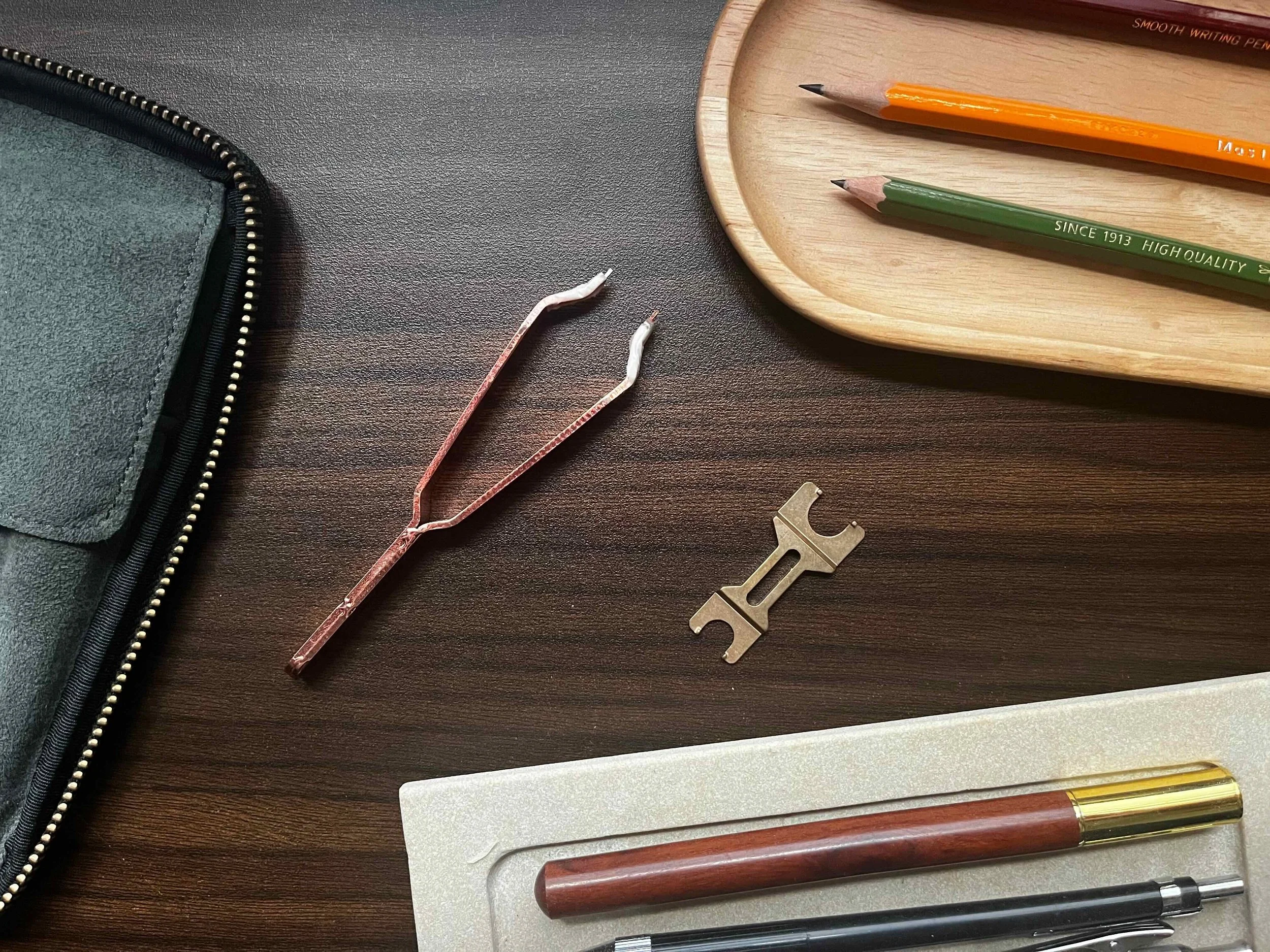
2 of the three tools needed to fully disassemble a 146/149. A nib disassembly tool (left) and piston (right). A knockout block is needed to fully unseat the nib and feed from the housing.
A Pilot Custom Urushi using the CON-70 converter presents a different situation. When the converter wears out, a replacement costs a few hundred yen, ships from Amazon, and slots into place without ceremony. The same goes for a Sailor KOP, Platinum Izumo, or any high-end Japanese fountain pen aside from the Namiki No. 50, for that matter.
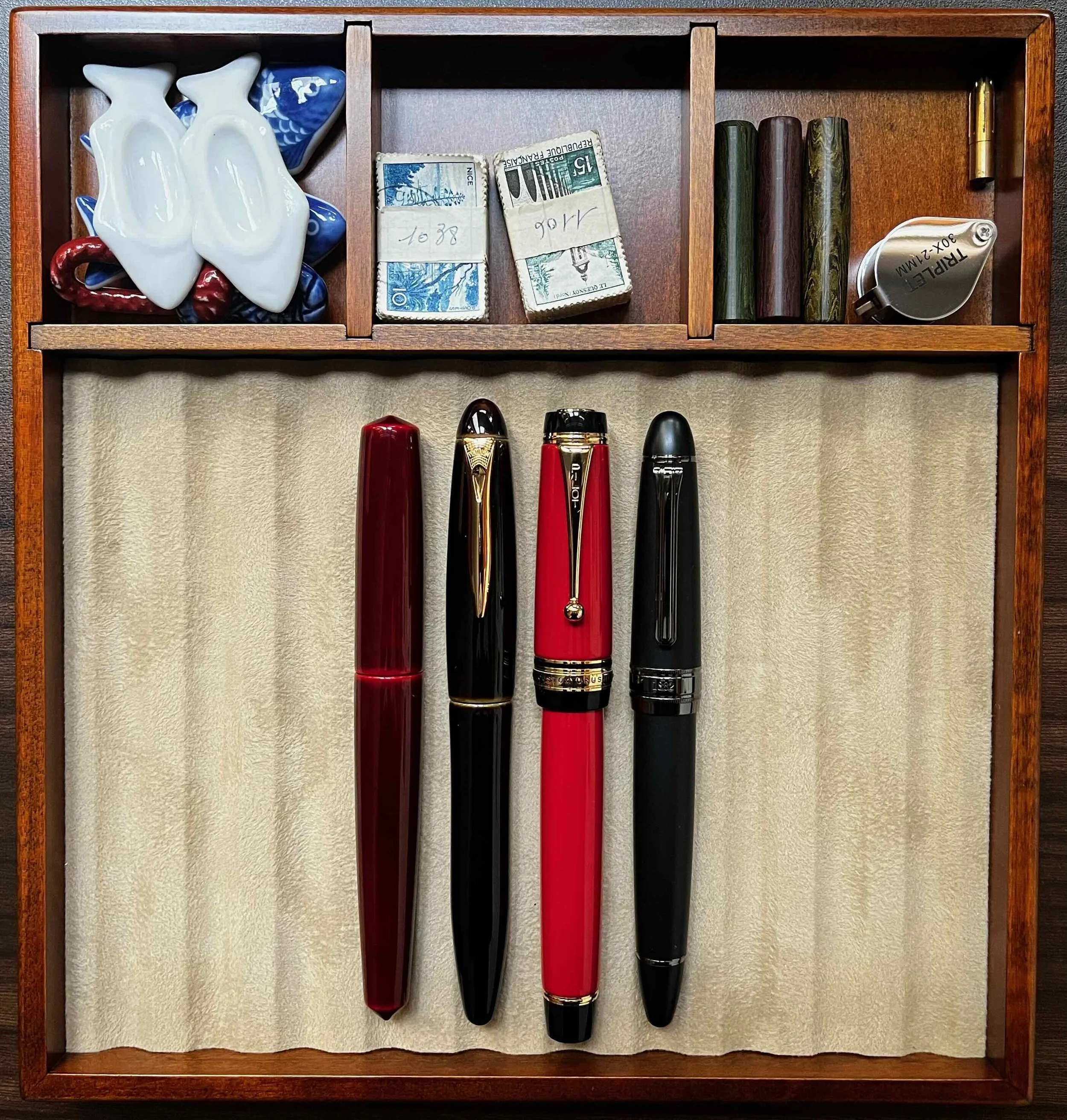
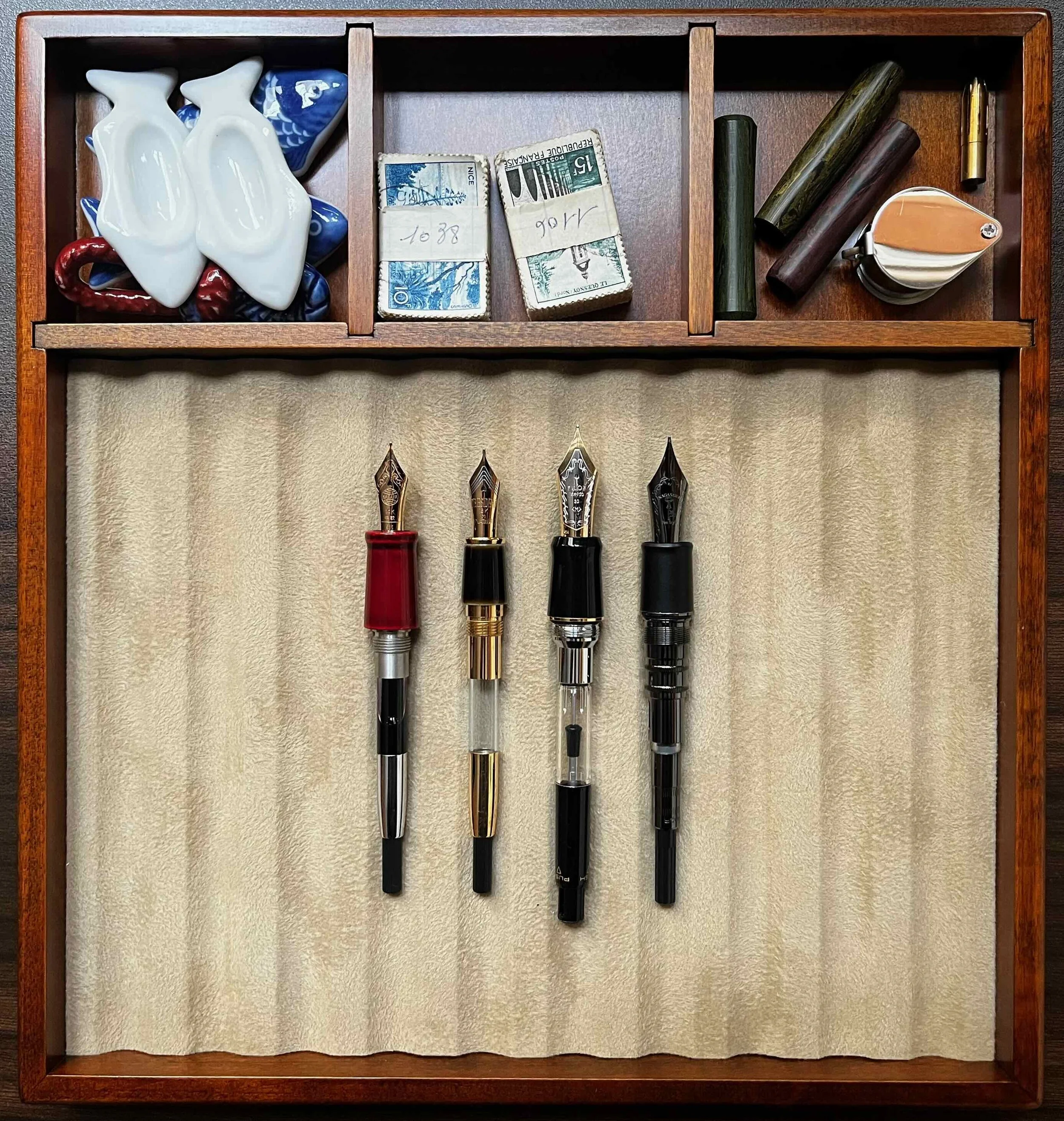
Left to right: Nakaya Ryogiri, Platinum Izumo, Pilot Custom Urushi, Sailor King Profit.
A piston-filling pen integrates the filling mechanism into the pen body. A C/C pen keeps them separate. The converter is not a permanent component; it is a replaceable part with a finite service life, and that is by design.
If a converter fails, you replace the converter. If a piston seal fails, you repair the pen.
Enthusiasts tend to read the former as evidence of cheapness and the latter as evidence of quality. In many other product categories, repairability is considered a virtue. We applaud laptops with replaceable batteries. We value cars whose common wear items can be swapped without dismantling the drivetrain. The appeal of a product that can be maintained by its owner, without specialized tools or factory intervention, is, apparently, only controversial in fountain pens.
I understand the complaint that, past a certain price point, a C/C system can feel like a corner cut. As though every element of the pen received careful thought except the one that moves. The assumption is that integration is always the more considered choice.
It might be the opposite. A maker who opts for a converter has decided, consciously, that the filling mechanism does not need to last forever. The pen does.
I made a version of this argument in my piece on ebonite feeds. The enthusiast's logic is consistent across hobbies: a component that demands more care is, somehow, a component worth preferring. Sometimes that perception is justified; a beautifully engineered filling mechanism possesses its own charm, and I have purchased pens for this very reason. Other times, I’m glad the pen comes with a C/C.
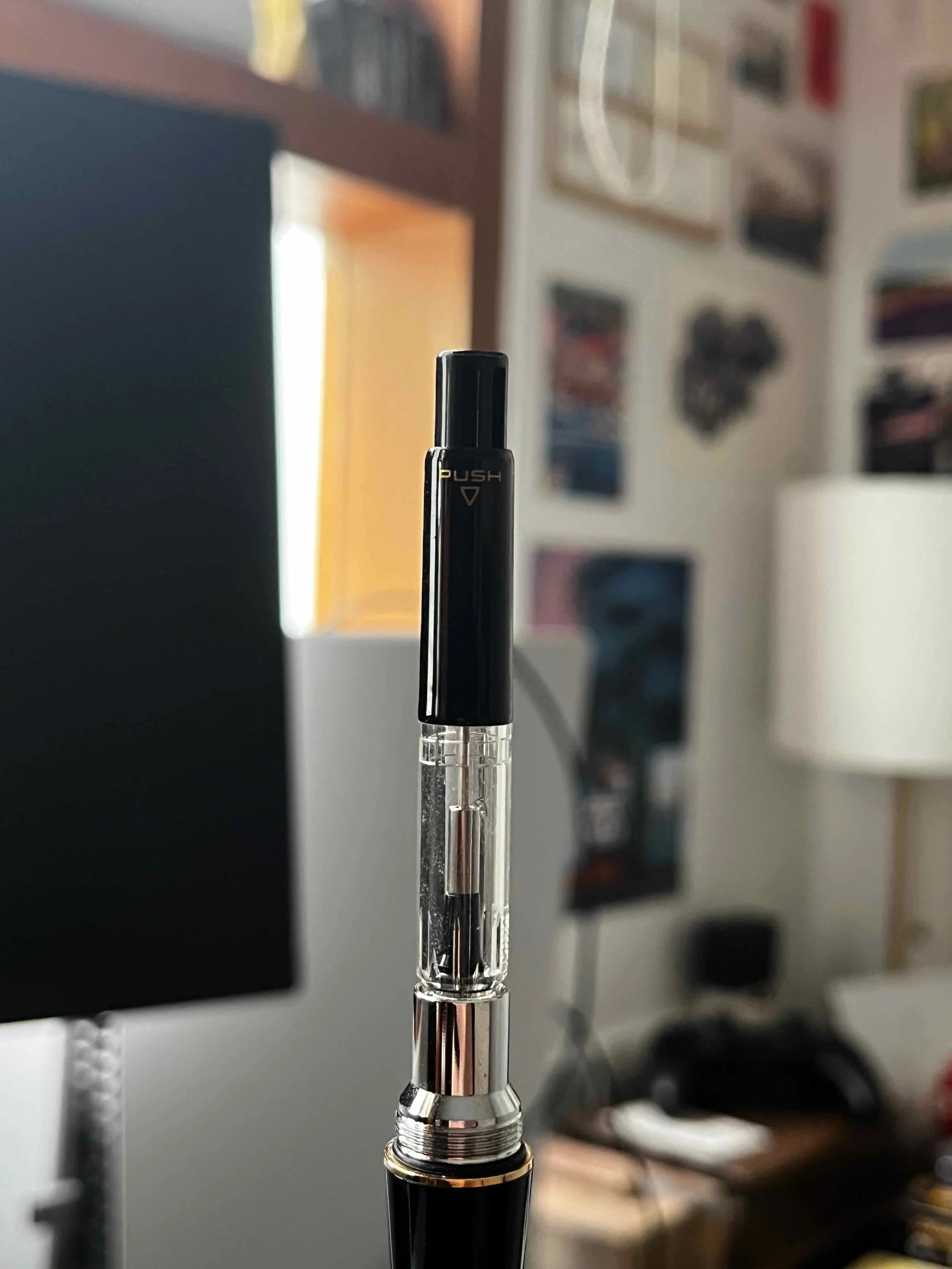
Pilot’s CON-70 converter. One of the best in the business.
None of this is an argument against piston fillers, vacuum fillers, or other integrated systems. What I’m trying to say is that a cartridge/converter system may lack romance, but it is hardly a sin.
I'm also trying to say that it is extremely painful to pay Montblanc to fix my pen.
—Montblanc 254, Montblanc Irish Green
-
September 2026
- Sep 28, 2026 The Montblanc in the Attic
- Sep 24, 2026 Pelikan M800
- Sep 10, 2026 Hotel Stationery: Tokyo Station Hotel
-
August 2026
- Aug 29, 2026 Sakura Craft Lab 001
- Aug 17, 2026 1969 Sailor Mini 21
-
July 2026
- Jul 20, 2026 The Pen Case I Have in Mind
- Jul 8, 2026 Kyoei’s Kiwami Writing Mat
-
June 2026
- Jun 22, 2026 In Defense of the Converter
- Jun 12, 2026 Sailor King Profit
- Jun 5, 2026 Komeda’s Coffee in Bali
-
May 2026
- May 16, 2026 Japanese Ateliers (III): Kato Seisakusho
-
April 2026
- Apr 26, 2026 Pelikan 400NN
- Apr 12, 2026 On Ebonite Feeds
-
March 2026
- Mar 26, 2026 After the Ink Is Gone
- Mar 22, 2026 Hotel Stationery: The Langham Hong Kong
- Mar 19, 2026 Hotel Stationery: The Aman Tokyo
-
February 2026
- Feb 22, 2026 Japanese Ateliers (II): Hakase
- Feb 14, 2026 Japanese Ateliers (I): Nakaya
- Feb 7, 2026 The Price of Writing in Gold
-
January 2026
- Jan 31, 2026 The True Heir
- Jan 24, 2026 Lifestyle