
1969 Sailor Mini 21
If I'm hard pressed for an answer, I would say that Sailor is my favourite fountain pen brand.
The author Haruki Murakami is known to have written his first novel Hear the Wind Sing with a Sailor fountain pen.
I'm no Murakami, but I like Sailors nonetheless. Throughout the years, I've come to own multiple of its modern iterations, to say nothing of individual maker pens that use Sailor nibs. All of them are built with precision and quality in mind, write well, and until recently, reasonably priced. The Sailor pen I want to talk about today, however, is one from the archives.
The year was 1969. Humanity made its giant leap when Apollo 11 landed on the moon. The Beatles walked across a zebra crossing and recorded their last album in Abbey Road. In a computer lab in California, the first message was sent over a network we now call the internet.
It was, by any measure, a year in which humanity was operating at the very limits of its ambition.
Yet, in an archipelago on the far side of the Pacific, an arms race brewed without history noticing. Platinum, Sailor, and Pilot were locked in battle, pushing the limits of their production techniques. Pocket fountain pens were the craze. Whoever could incorporate the most gold in their nibs would be the winner. In their minds, victory would mean dominion over the Japanese fountain pen market.
In a year of giant leaps, Sailor introduced the Mini with a 21 karat nib.
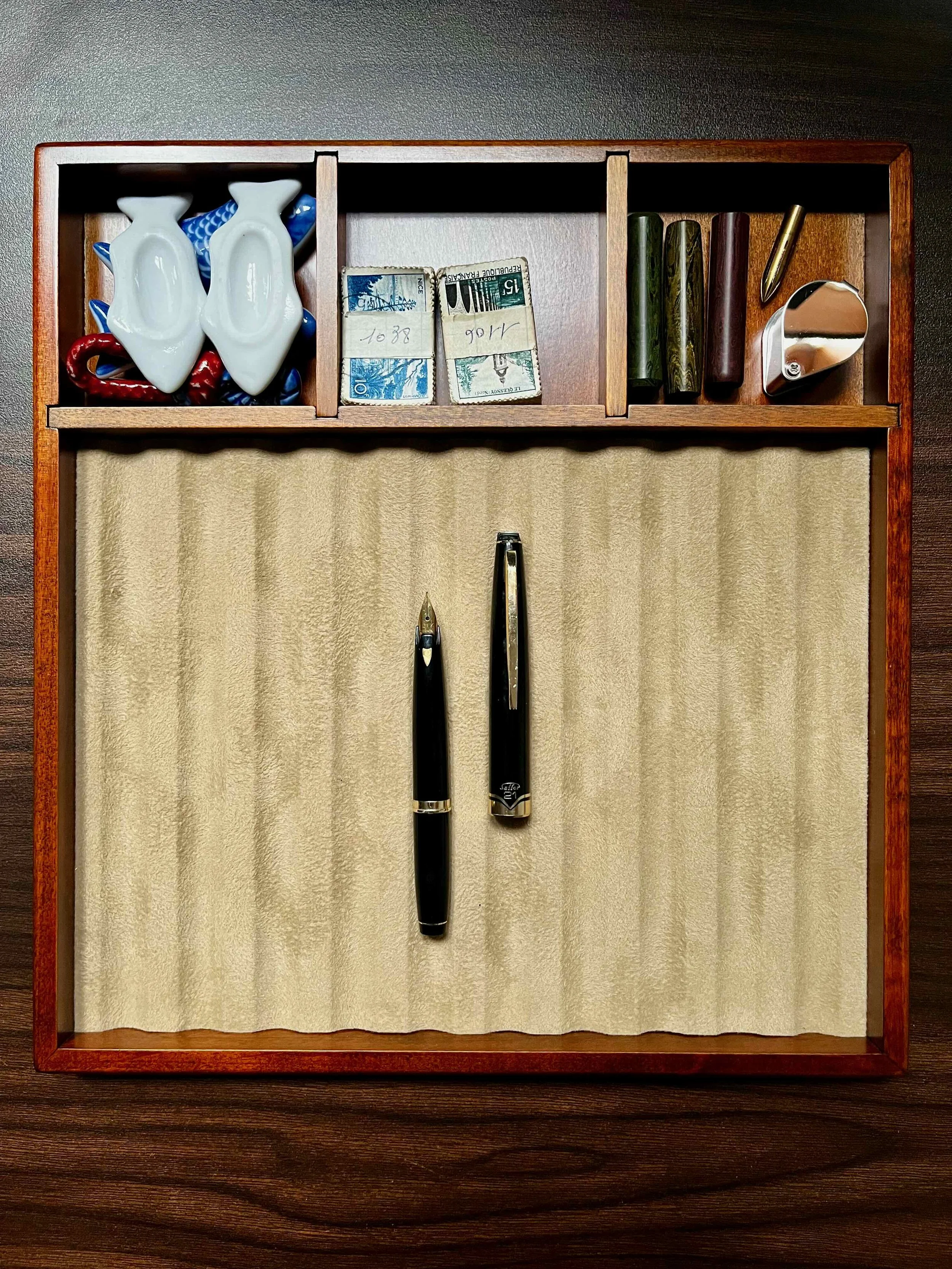
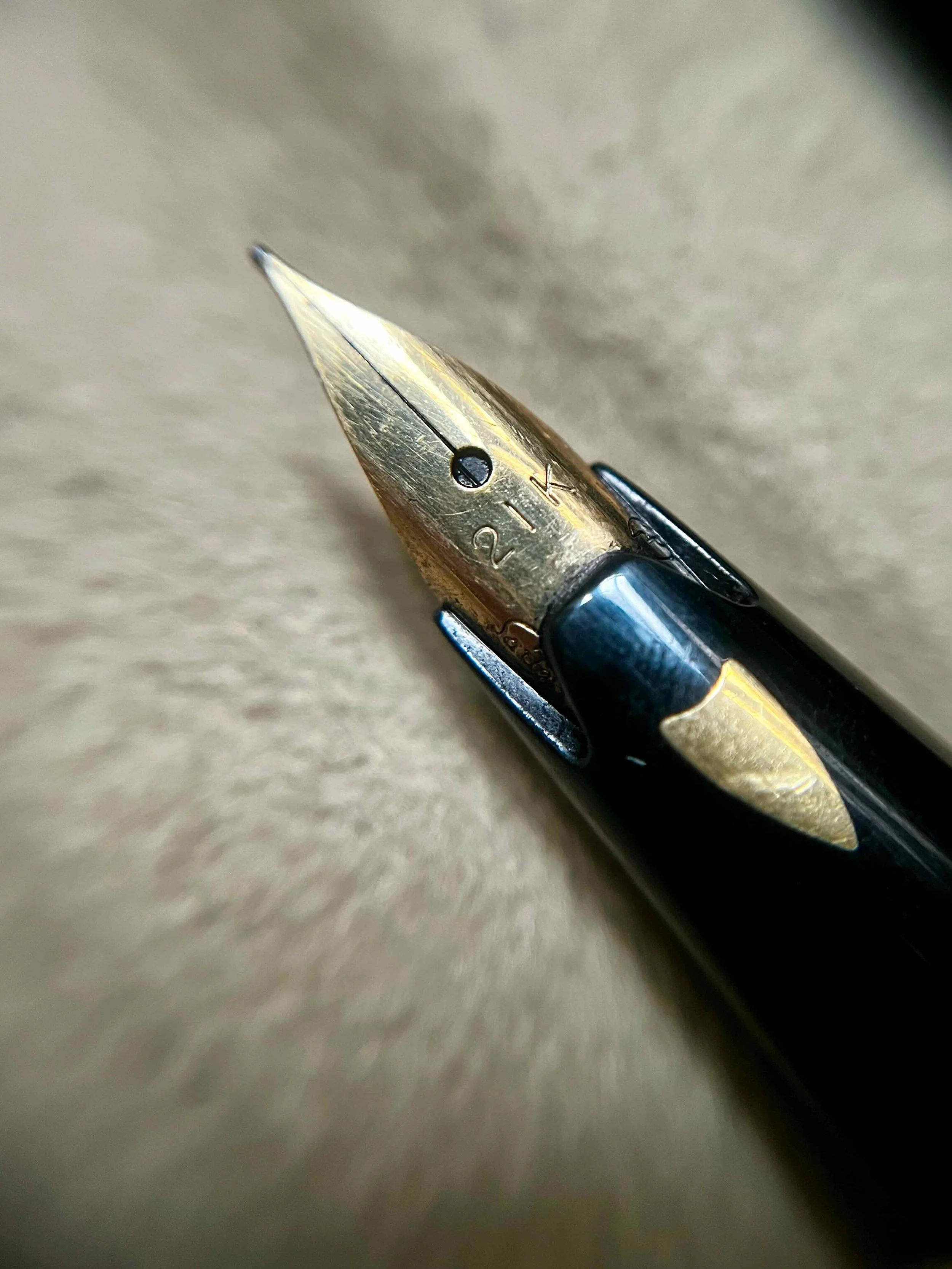
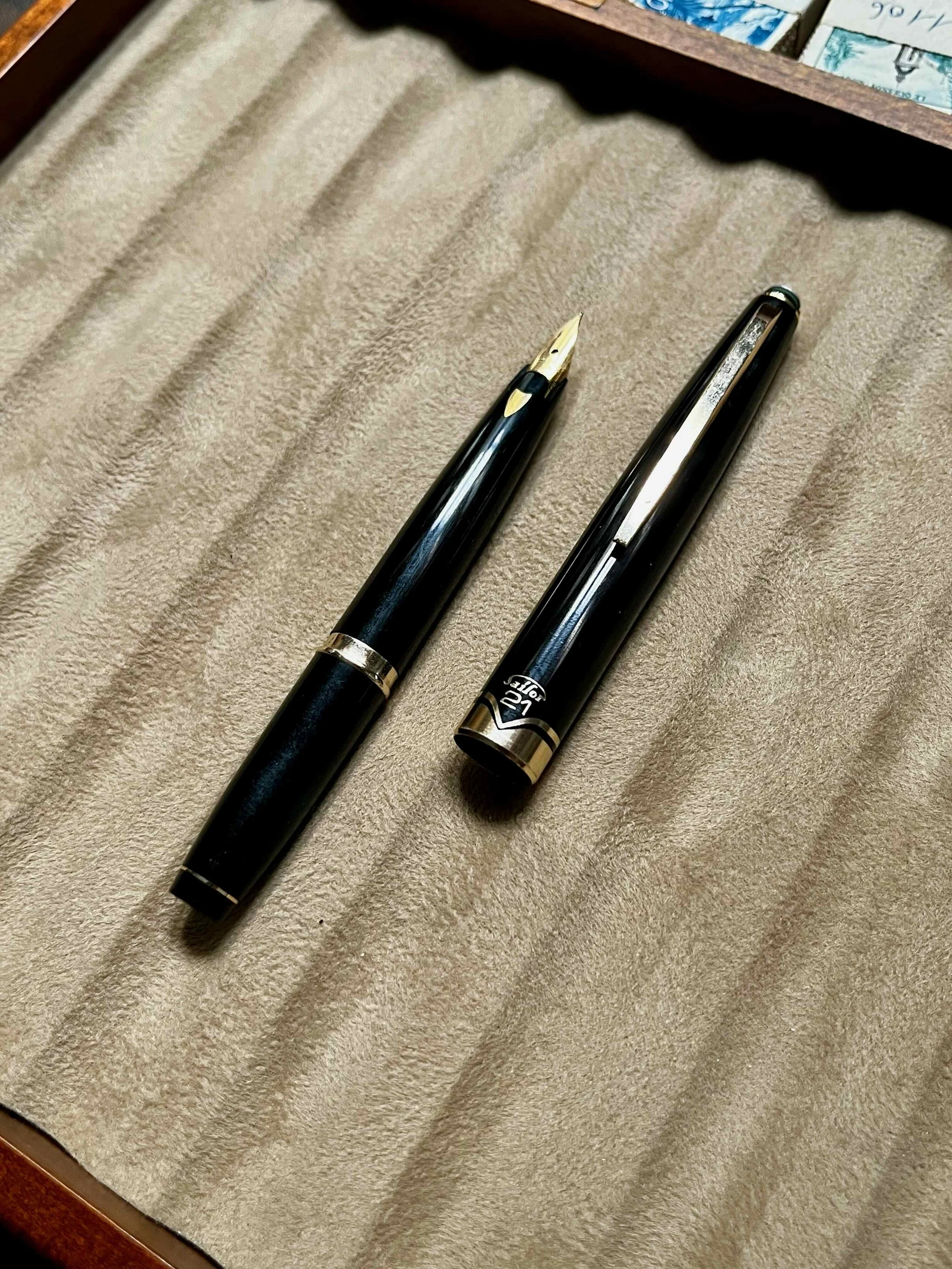
Sailor Mini 21 (1969)
Adding more gold may sound like a simple undertaking. It was anything but. Sailor's engineers had to invent a new alloy to keep the nib sturdy at such high gold content. If the formula wasn't right, the nib would bend under pressure and stay bent, instead of springing back.
It's difficult to say who won the gold war as it went on into the 70s. Sailor and Platinum eventually introduced 23 karat nibs, but it was Pilot who went on to become the largest pen company in Japan. In the end, the highest Pilot got was 22 karat in their Elite S-22. It would seem that only Pilot figured out that pushing the envelope on other stationery items was the answer.
Today, the gold war of the 1960s and 70s is a distant memory. Gold is becoming increasingly unaffordable to incorporate. Sailor, after decades of championing their use of 21 karat nibs, reduced the number of SKUs with such nibs after costs ballooned out of control. Today, Sailor reserves the use of 21 karat nibs for special editions and flagship models which cost upward of 70,000円.
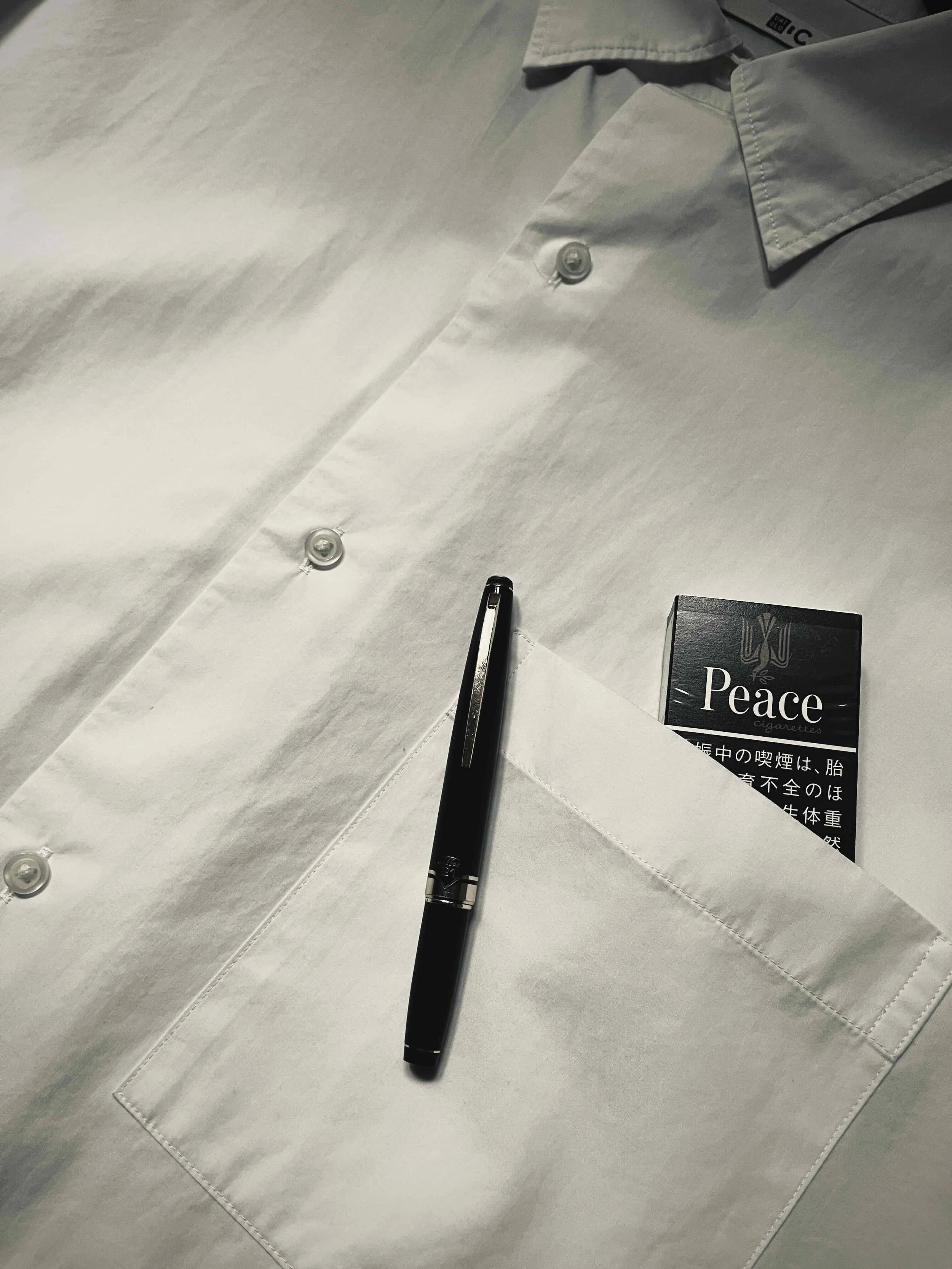
Holding a Sailor Mini 21 in my hand, I feel the spirit of the 1960s coursing through the pen. It is a form factor I am fond of. Even by modern standards, the design remains sleek and elegant. The slight curvature on the barrel and how the cap posts make the pen reminiscent of a spaceship. Most importantly, the Mini 21 is a joy to write with.
Compared to Sailor's modern 21 karat nibs found in the Pro Gear and the discontinued Profit Large, the Mini 21's nib is a tad softer, though I doubt that I'd be able to tell the difference blindfolded. I was convinced that it is much smaller, but it is only 1 cm shorter than a full size Pro Gear when capped. With both caps posted, the two are very similar in length. Though, the Mini's short barrel limits it to the use of cartridges. You can still see Sailor Minis being sold in pristine condition with their sticker intact—3,000円.
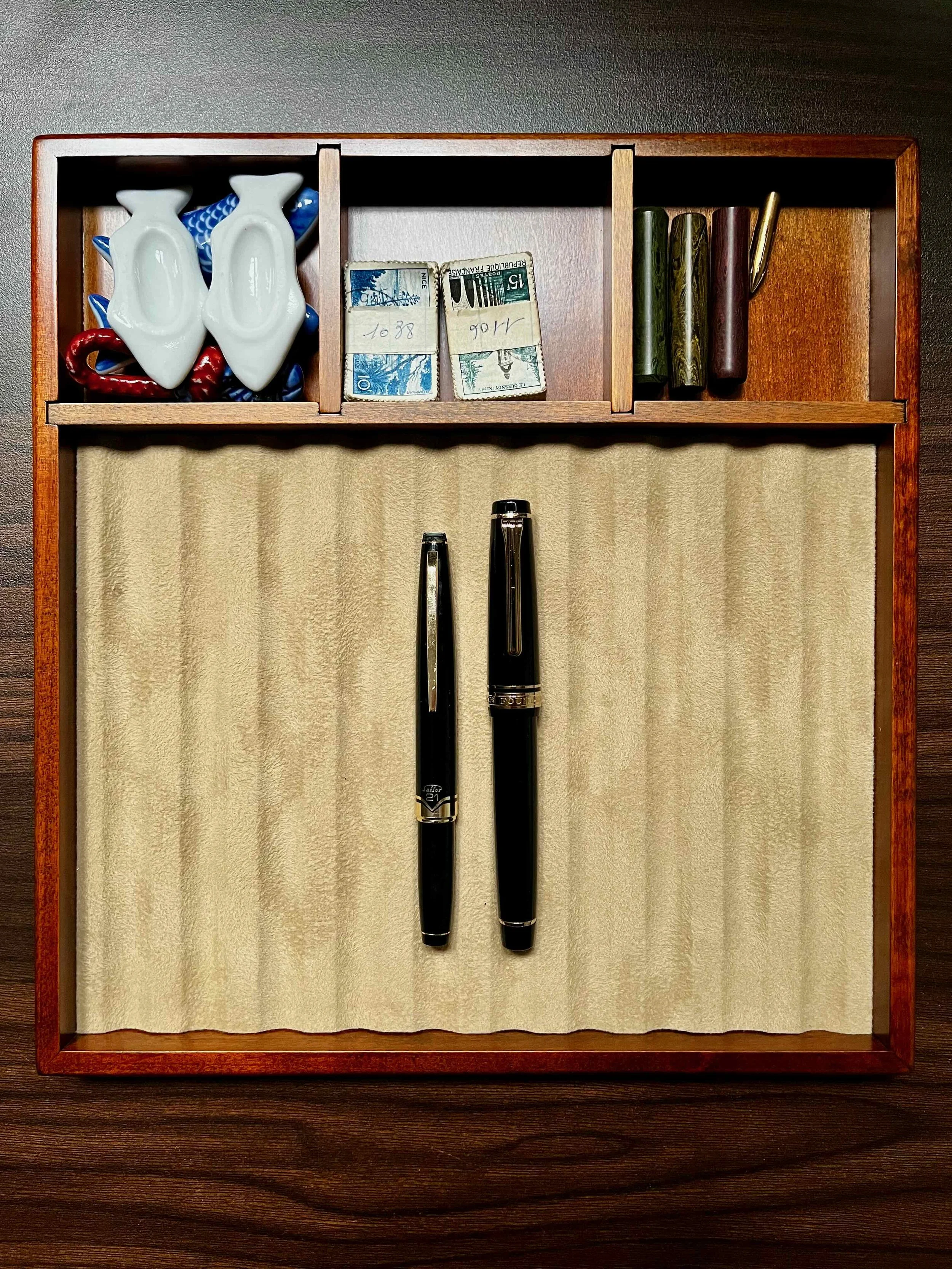
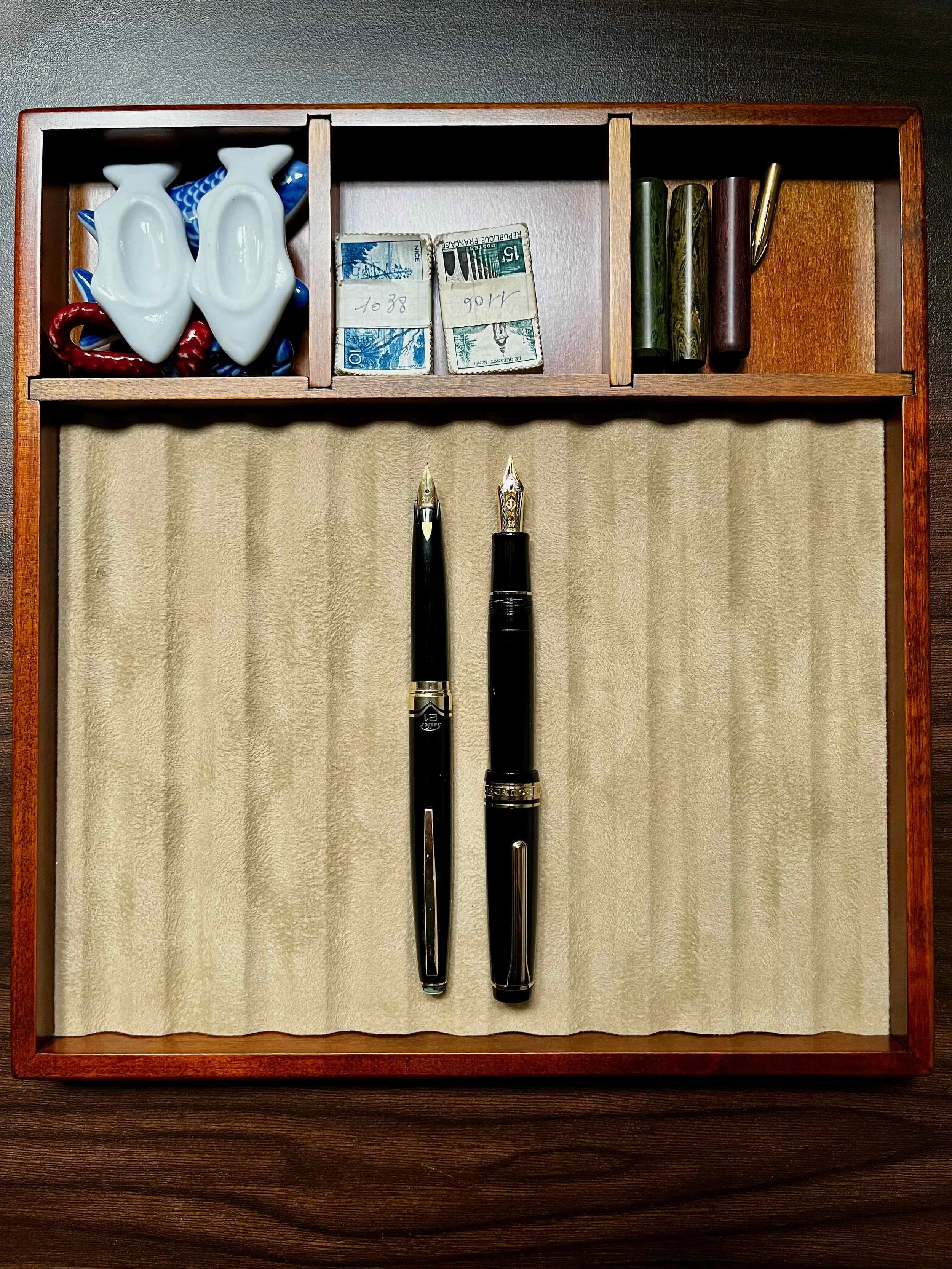
Sailor Mini 21 (left), Pro Gear 21K (right).
Until recently, a Sailor Mini 21 can go for as little as 4,000円 on second hand marketplaces. Since Sailor's latest price increase and reduction in the use of 21 karat nibs, prices on the Mini 21 have mostly doubled. This has been unfortunate, but inevitable.
The Mini was reincarnated in Sailor's modern catalogue as the Pro Gear Slim Mini, albeit this version was equipped with a 14 karat nib. This too, was discontinued recently. More faithful reincarnations exist. Exclusive to the Japanese market, a Pro Gear Slim Mini 21 model exists. Then there’s also the Pro Gear Mini. The latter has a larger, full-sized, 21 karat nib and a thicker diameter. However, these Pro Gear Minis are very limited in production, and as far as I can tell, do not exist in Sailor's own catalogues. Daimaru Fujii Central had a low-centre-of-gravity store exclusive model that was equipped with a metal section similar to the 1911 Black Lustre.
Fifty years later, the original Sailor Mini 21 remains a pen I celebrate. It is a pen I often reach for, and the year it was conceived makes it the more special. I rue the day where it disappears off the second hand market. Aside from being an excellent writer, I find the Mini 21 a reliable indicator of the direction of fountain pen prices. From my observation, when prices on the Mini 21 increases, others tend to follow suit.
The engineers of Apollo got their moment. A pen factory in Hiroshima was never going to receive the same recognition.
Perhaps that's the right way round. A moonshot is meant to be witnessed. A pocket pen is meant to disappear into a shirt pocket, into a signature, into the ordinary Tuesday of an office worker who never once thought about the metallurgy riding above his heart.
—Sailor Mini 21, Sailor Black
-
September 2026
- Sep 28, 2026 The Montblanc in the Attic
- Sep 24, 2026 Pelikan M800
- Sep 10, 2026 Hotel Stationery: Tokyo Station Hotel
-
August 2026
- Aug 29, 2026 Sakura Craft Lab 001
- Aug 17, 2026 1969 Sailor Mini 21
-
July 2026
- Jul 20, 2026 The Pen Case I Have in Mind
- Jul 8, 2026 Kyoei’s Kiwami Writing Mat
-
June 2026
- Jun 22, 2026 In Defense of the Converter
- Jun 12, 2026 Sailor King Profit
- Jun 5, 2026 Komeda’s Coffee in Bali
-
May 2026
- May 16, 2026 Japanese Ateliers (III): Kato Seisakusho
-
April 2026
- Apr 26, 2026 Pelikan 400NN
- Apr 12, 2026 On Ebonite Feeds
-
March 2026
- Mar 26, 2026 After the Ink Is Gone
- Mar 22, 2026 Hotel Stationery: The Langham Hong Kong
- Mar 19, 2026 Hotel Stationery: The Aman Tokyo
-
February 2026
- Feb 22, 2026 Japanese Ateliers (II): Hakase
- Feb 14, 2026 Japanese Ateliers (I): Nakaya
- Feb 7, 2026 The Price of Writing in Gold
-
January 2026
- Jan 31, 2026 The True Heir
- Jan 24, 2026 Lifestyle